The rubble remained. But the desire didn't.
The hill is bigger than your body.
So you build a machine that needs two directions at once.
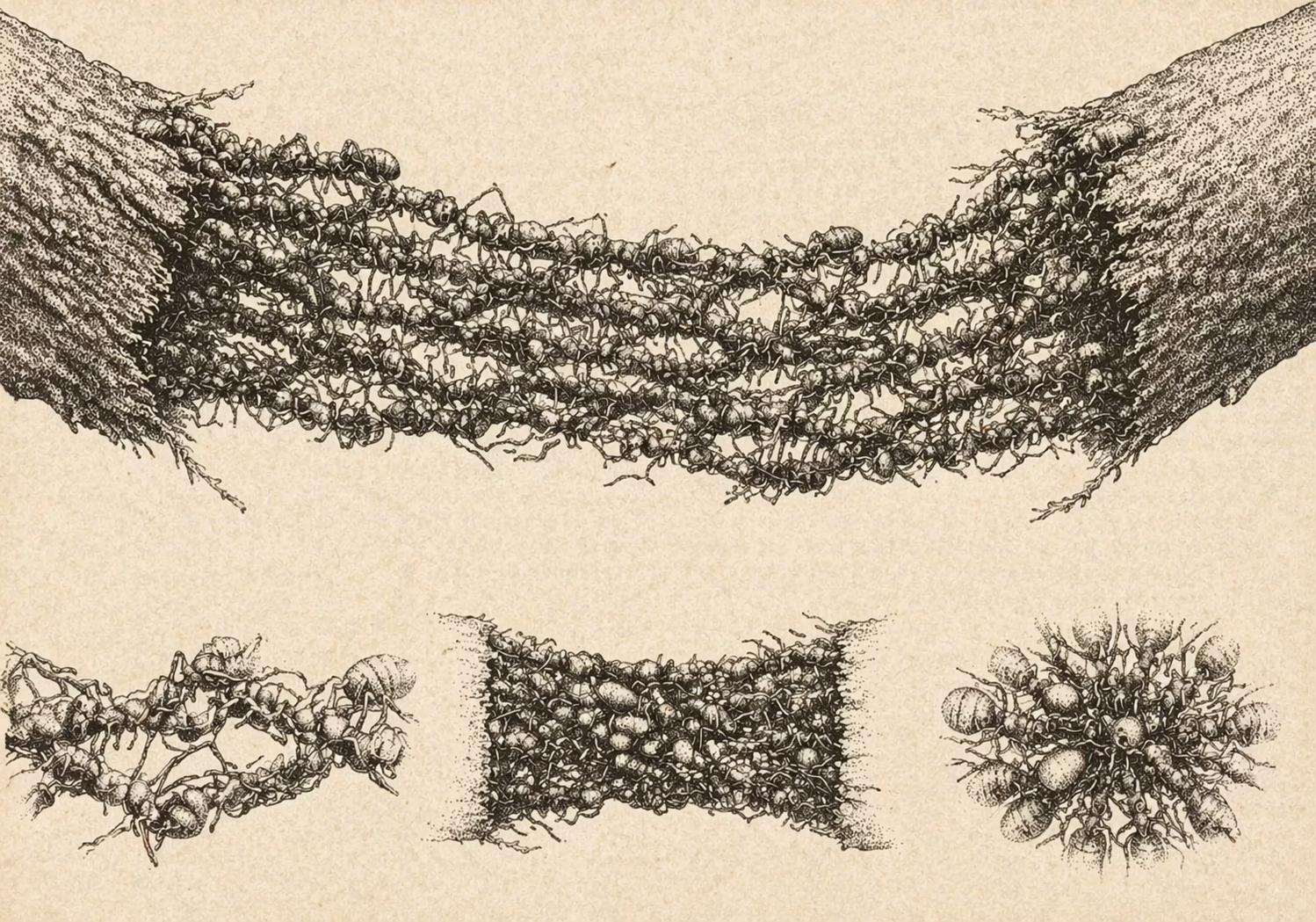

700,000 bodies. No blueprints. No managers.
When the column meets a gap, workers lock legs. They become the bridge.
The first architecture was a body that became infrastructure so other bodies could cross.
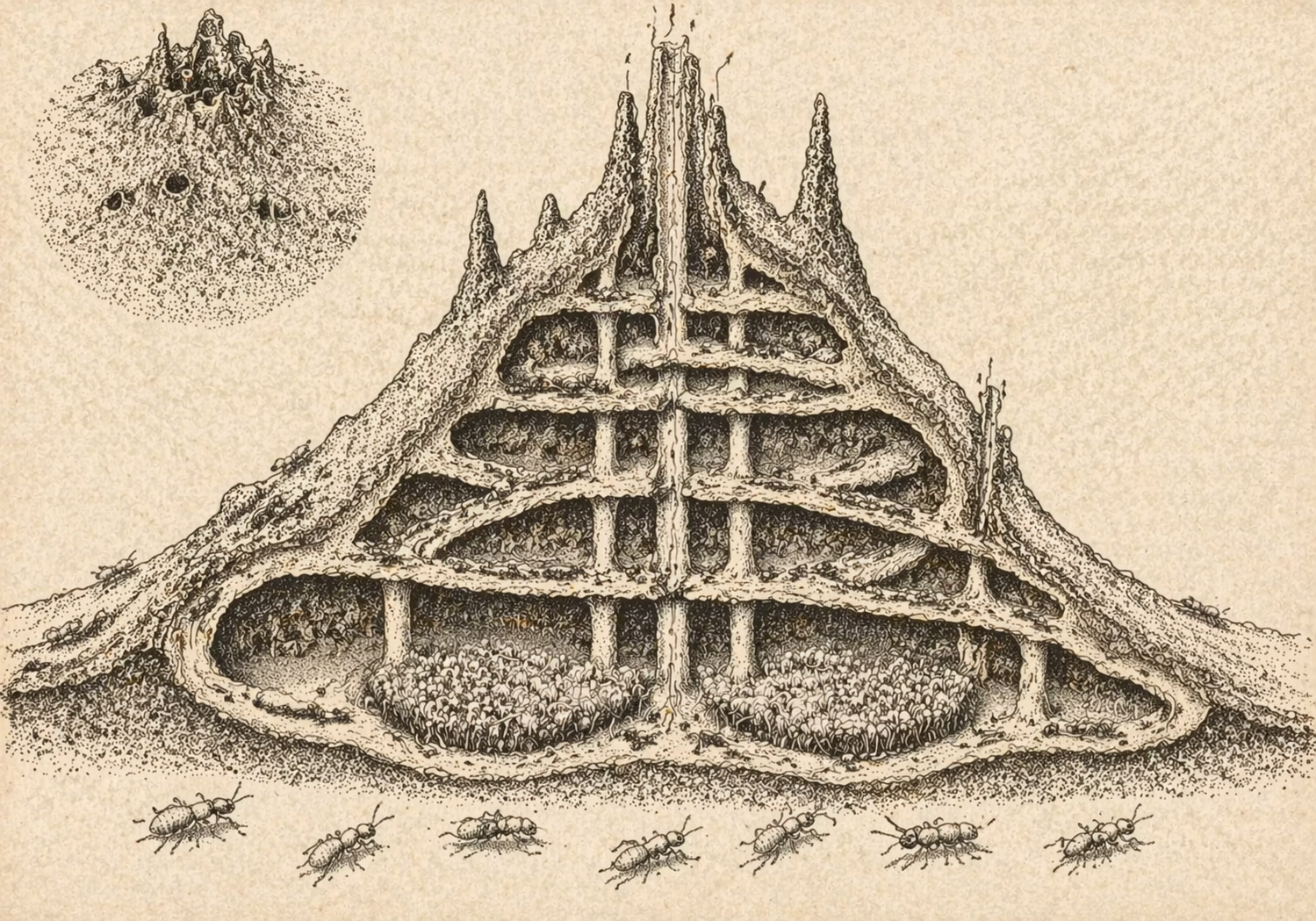
Two million termites. Functionally blind. They build the equivalent of a 1,500-metre tower.
No individual carries a plan. The cathedral is an accident of collective attention.
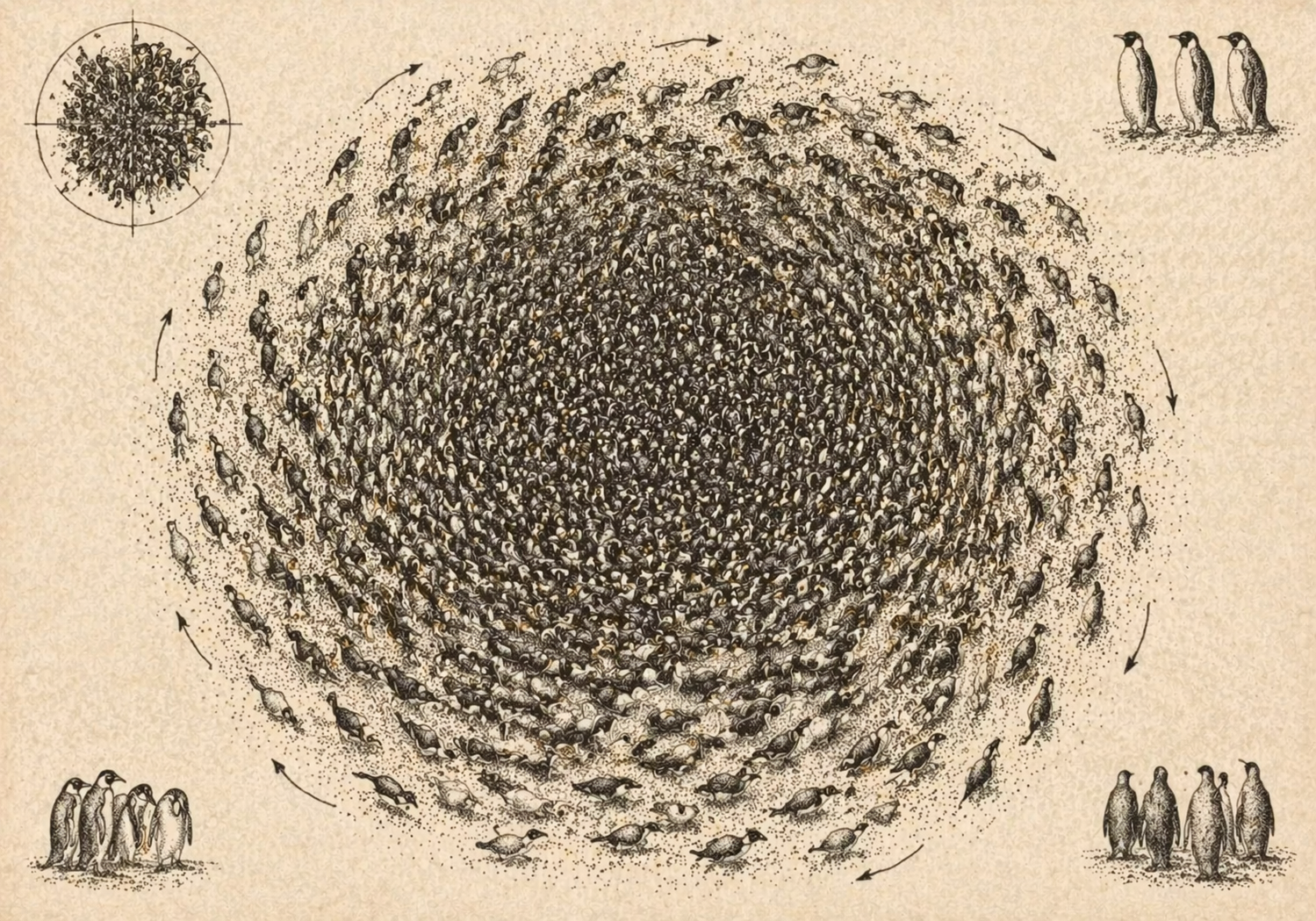
−60°C. No individual survives.
Every 30 seconds, the huddle rotates. Edge moves in. Centre shifts out. One direction warms. The other exposes.
The counterweight was not invented. It was recognised.
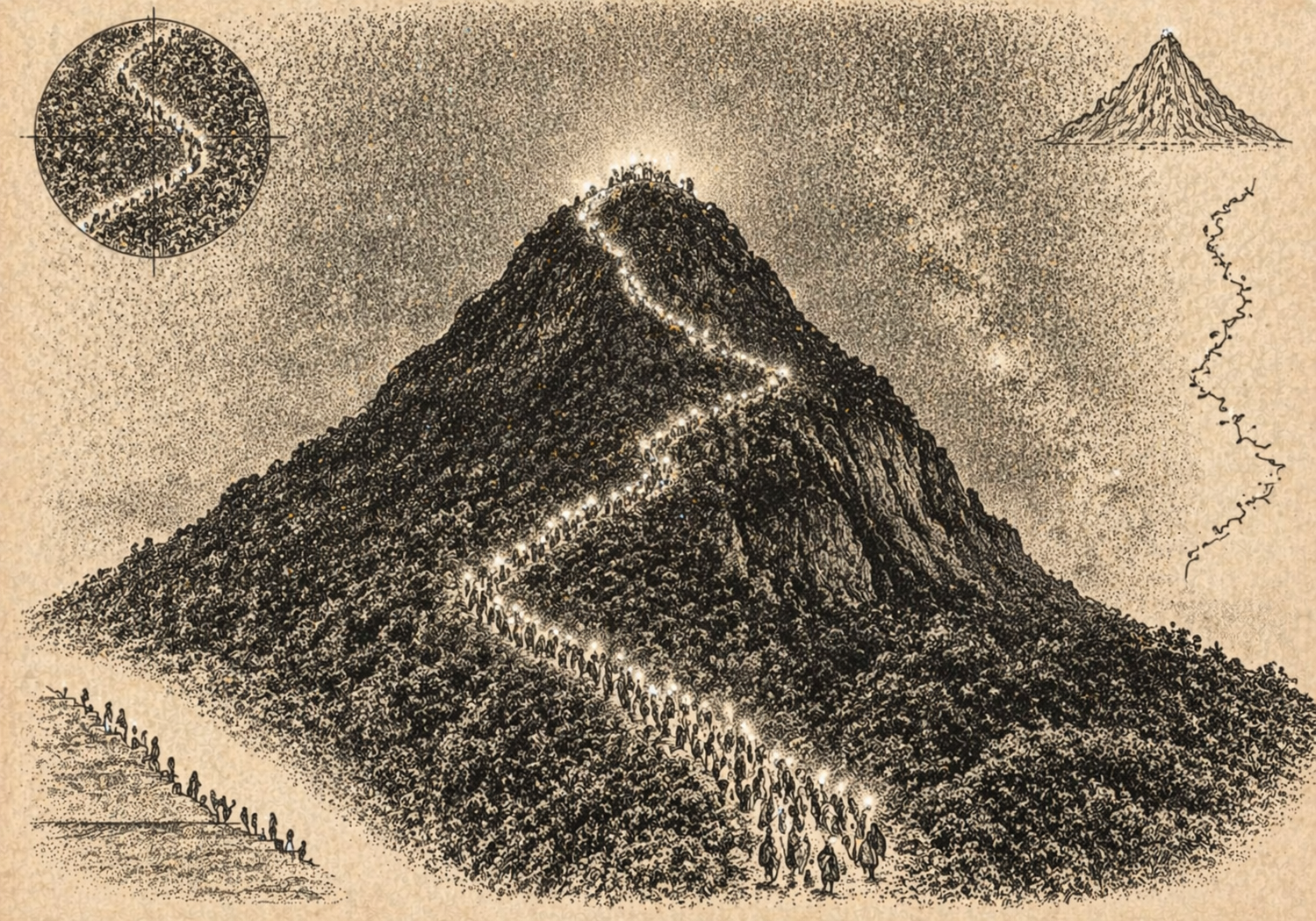
5,200 steps. Sri Pada. The sacred footprint.
They begin at 2 AM. Each carries a light.
The staircase narrows. Pace matches. Breathing synchronises. No one instructs this.
The path forces it — single file, close-packed, the rhythm of the body in front becoming yours.
For the duration of the ascent, there is no rank. No status. No distinction.
Only bodies moving upward at the same speed, breathing the same air.
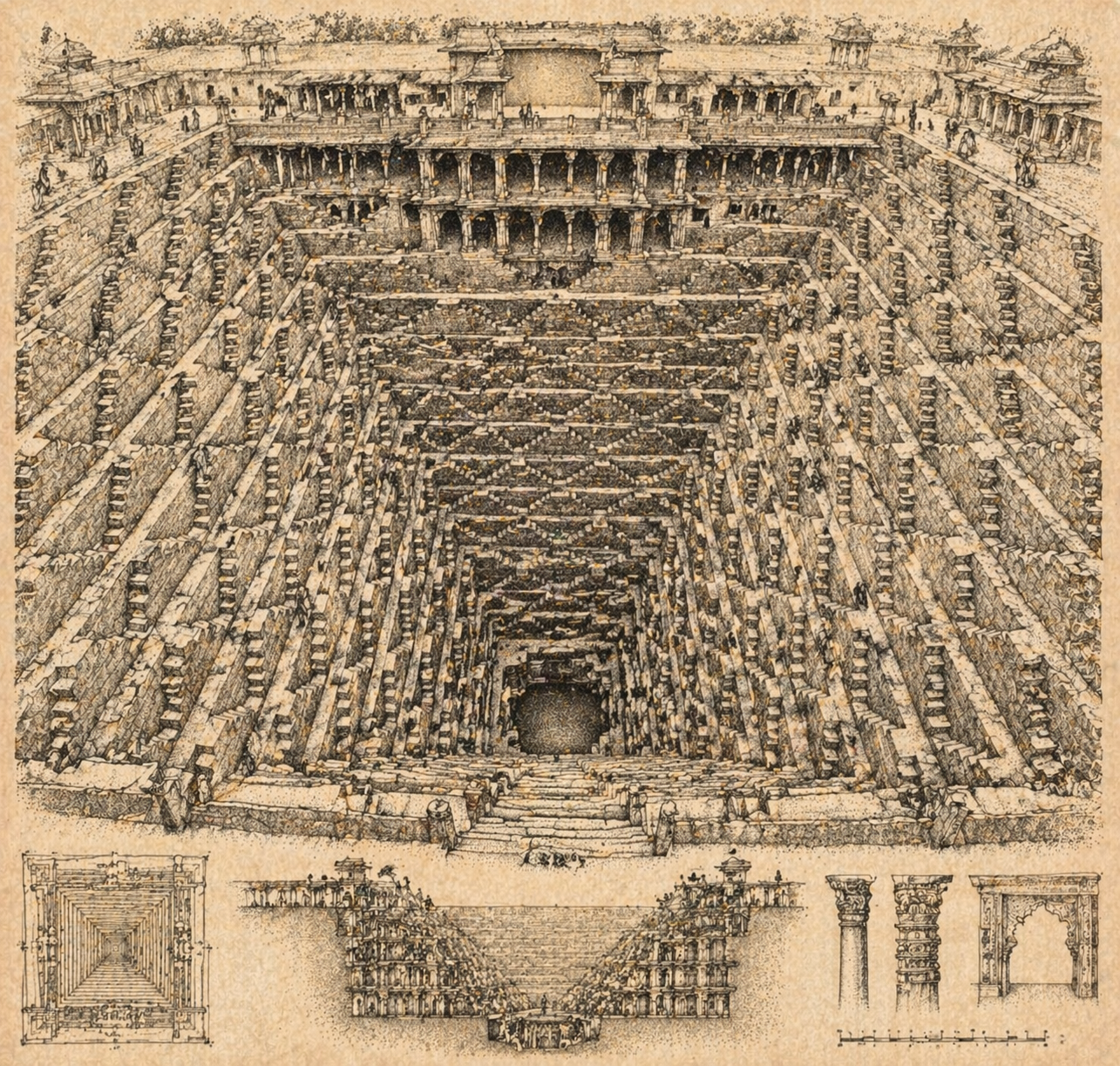
3,500 steps into the earth. Too narrow to rush. The architecture enforces humility.
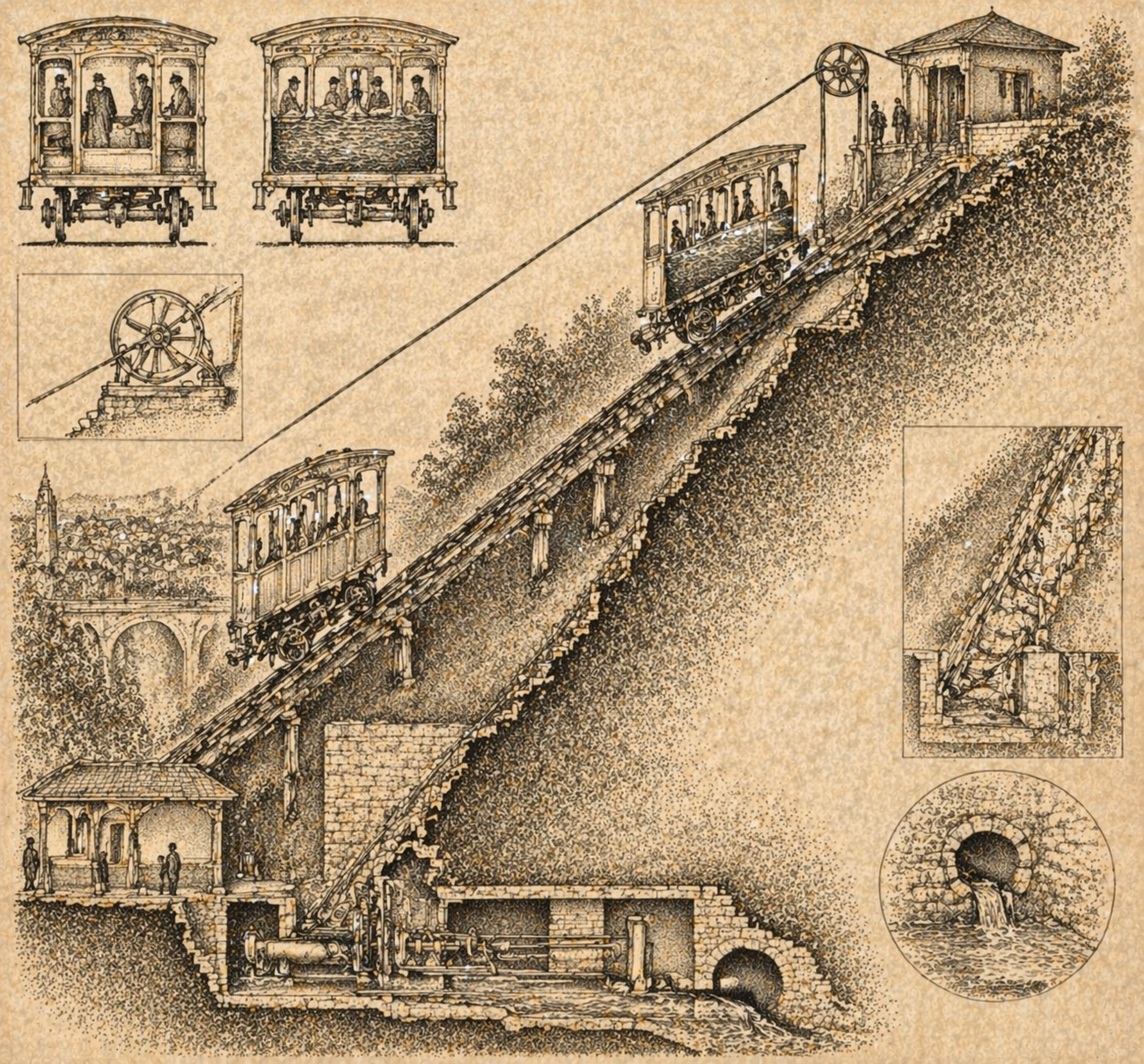
One descends. The other rises. You are riding the weight of water.
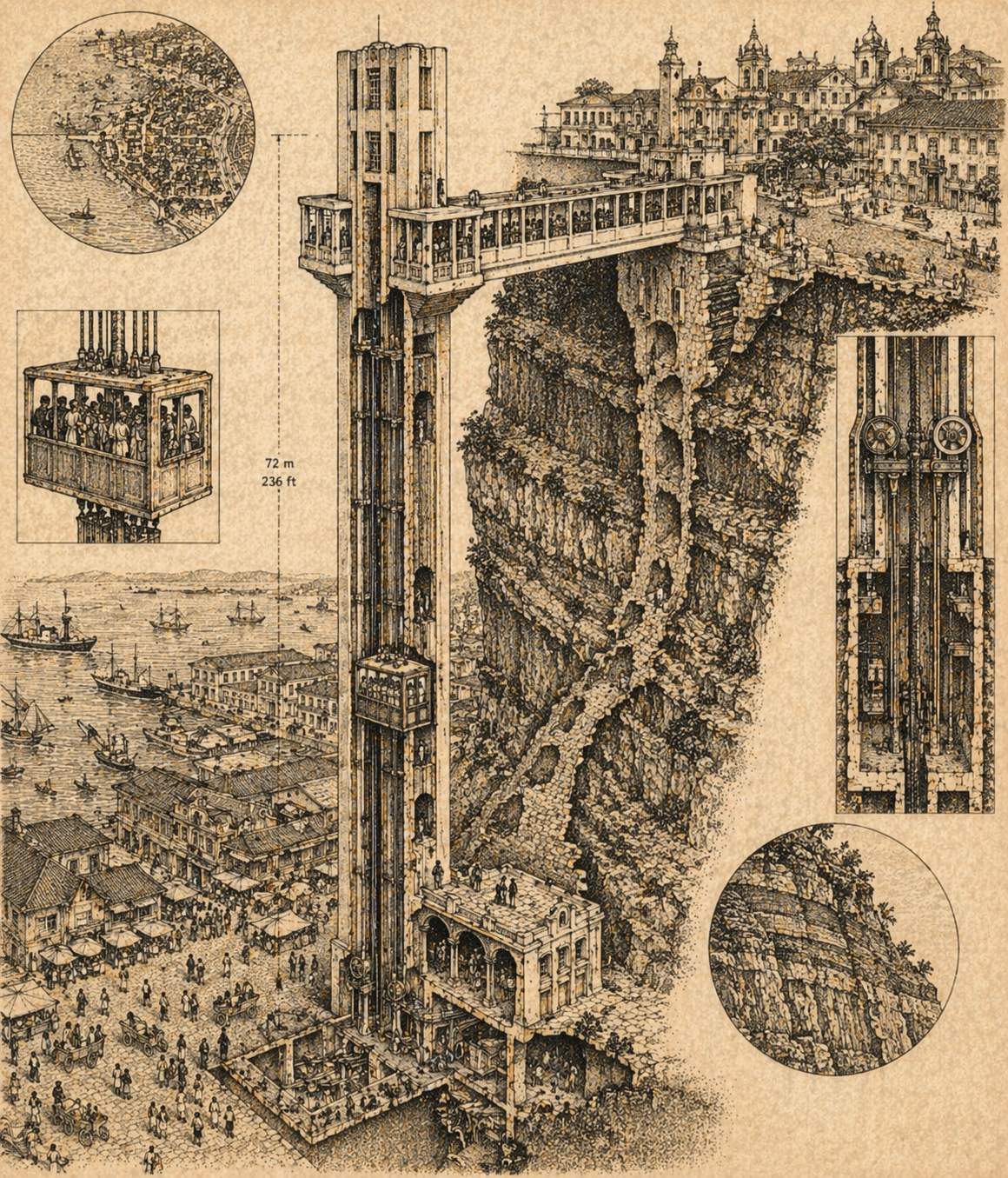
30 seconds. 72 metres. Four cents. Two cities in half a minute.
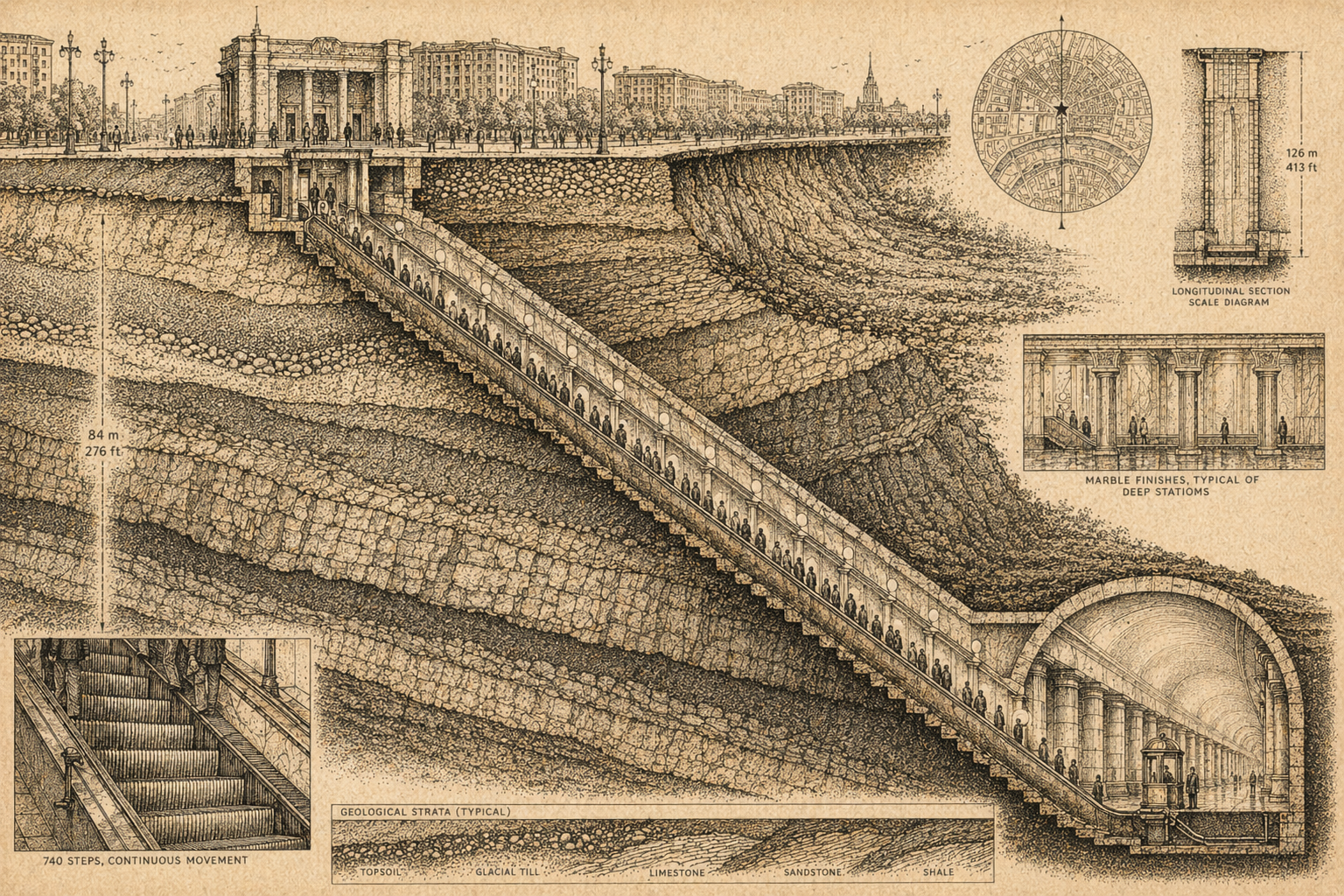
126 metres. The figures ahead shrink to points. Three minutes of enforced descent.
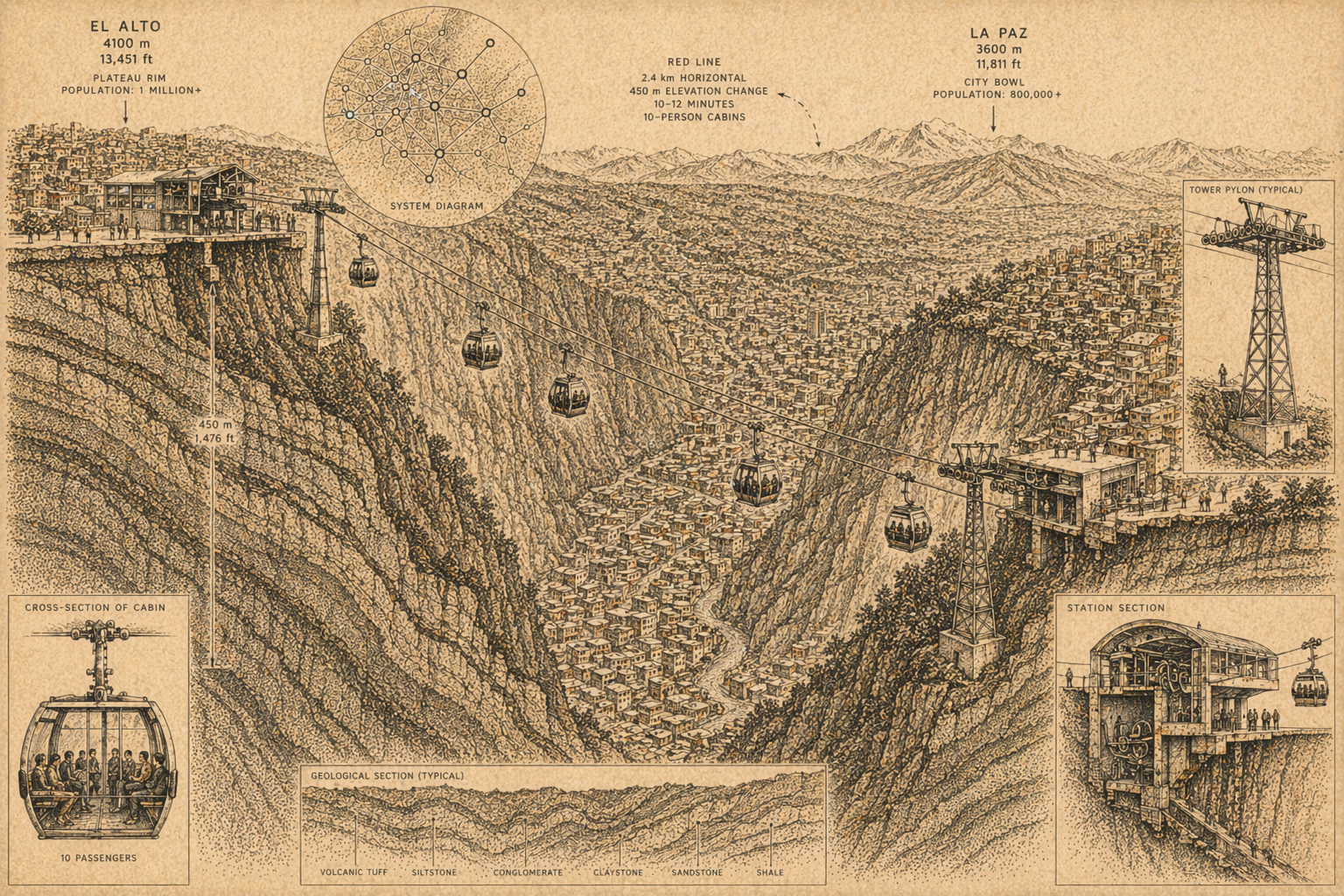
10 strangers in a glass box at 4,000 metres. The silence is immediate.
The hill shaped the machine. The machine shaped the world.
The staircase. The counterweight. The shared box. The synchrony. The aerial.
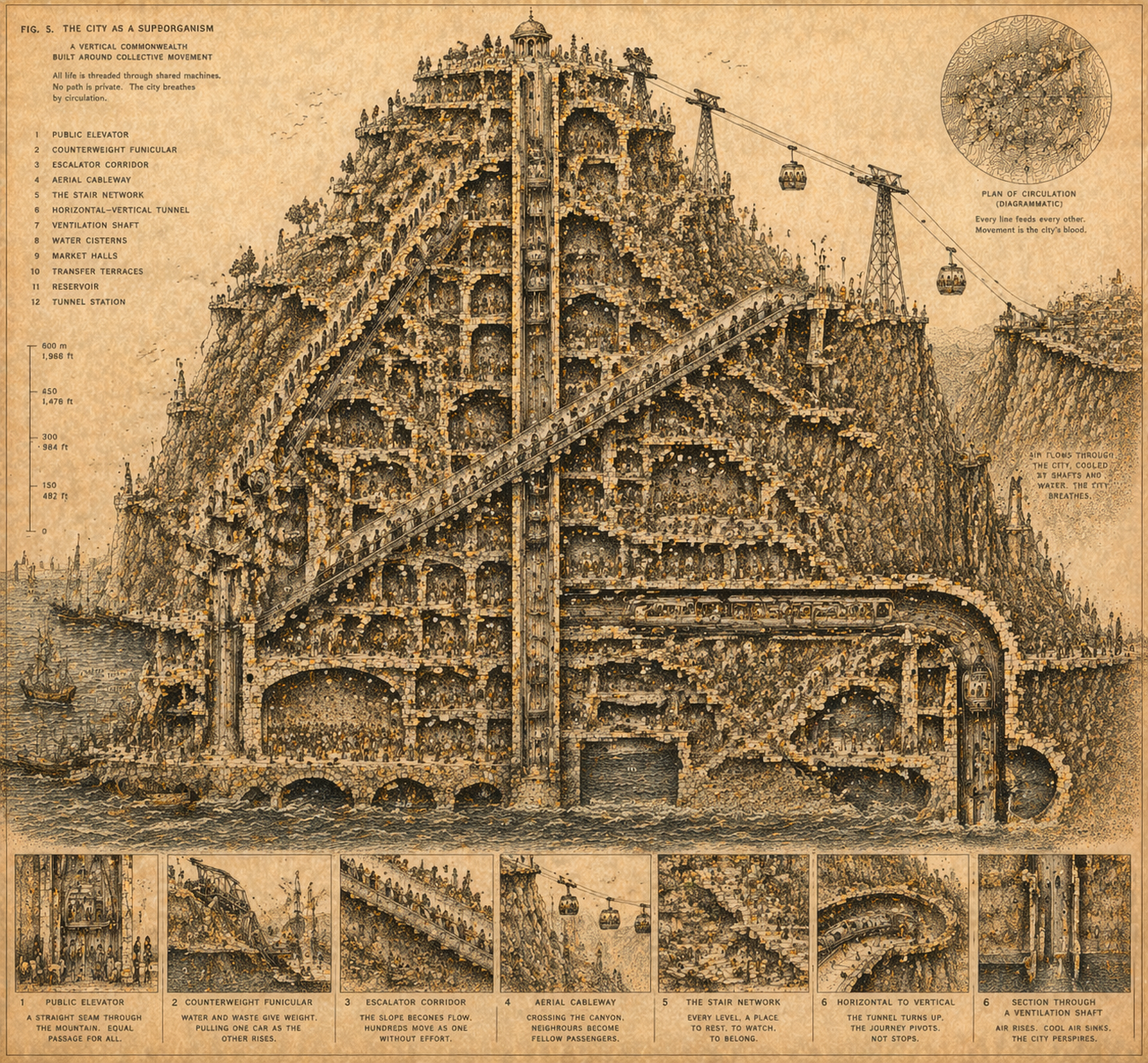
This city has never existed.
Every piece of it has.