The rubble remained. But the desire didn't.
If no machine could lift you — a body would.
The question was never how to go up. It was who would carry you.
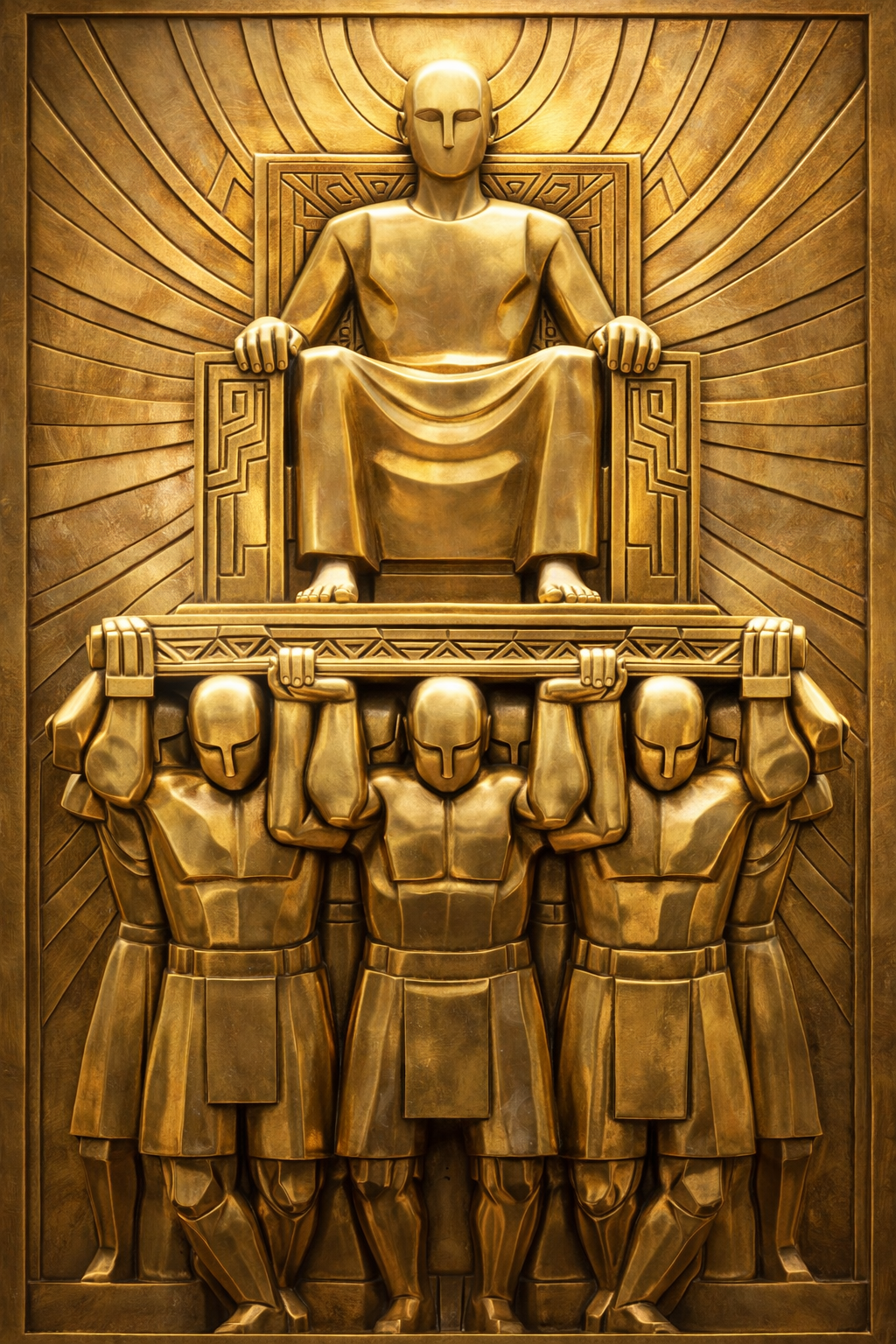
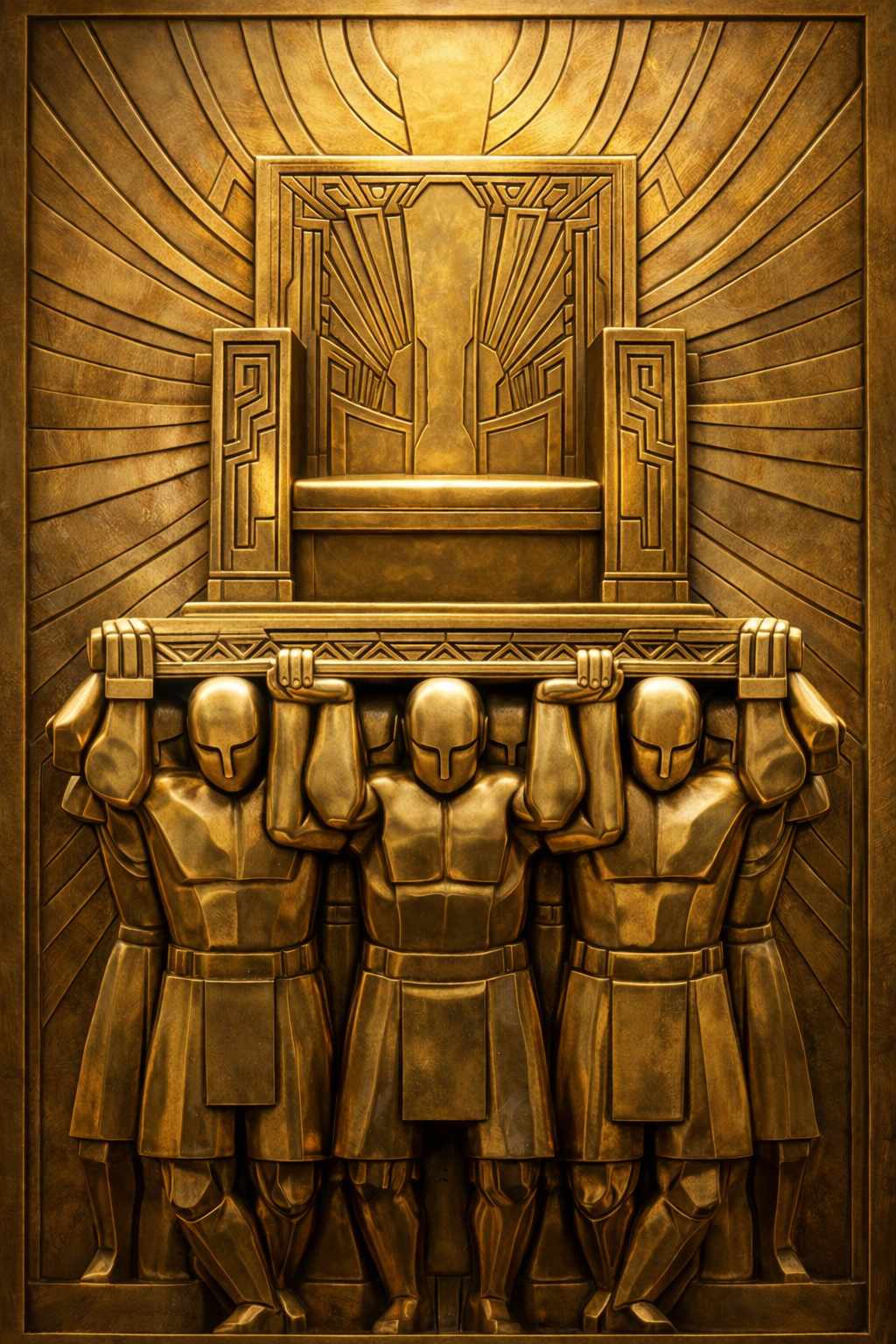
The Throne
In a world without the elevator, rank is measured in bodies.
Two bearers: ordinary. Four: you matter. Eight: untouchable. Twelve: God's representative on Earth.
One person's feet at the level of another's head. Power is not symbolised — it is built, in real time, from living material.
The person at the top is replaceable. The bodies at the bottom are permanent.
The Wheel
So they built a wheel and put a man inside it. He walked. The wheel turned. The stone rose.
A fourteen-to-one mechanical advantage — one person lifting three and a half tonnes.
Energy is not created or destroyed. It is transformed. The body darkens. The monument brightens. The wheel does not care which direction the life is flowing.
They hired blind men. Because they couldn't see the drop.
A wheel can be turned by any body.
Which body turns it next?
The Metropolis
One body lifts one person. That is a chair.
One body lifts a stone. That is a wheel.
A million bodies lift a city. That is civilisation.
Every building you have ever entered was raised by hands you will never see. Every bridge, every road, every wall. The bodies are in the foundation. They are the foundation. You cannot tell where the labour ends and the architecture begins because they are the same material.
If they stop, the city falls. It has always been this way. The only question is what we put in their place.