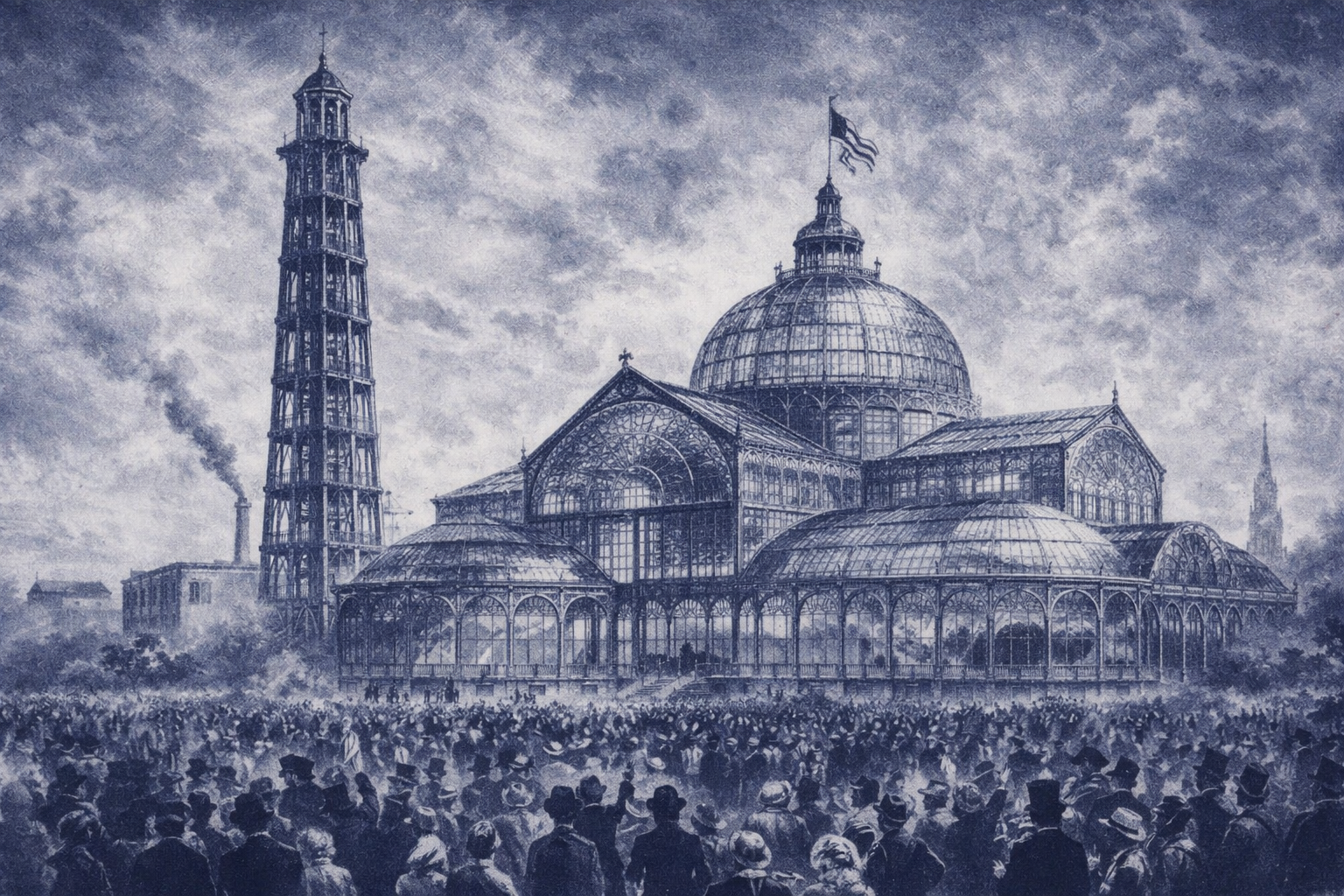
The Stage
A cathedral of glass and iron rises at the corner of 6th Avenue and 42nd Street. Twenty thousand people gather beneath its dome. They have come to see the future — machines that compress cotton, telegraphs that compress distance, revolvers that compress life.
Among 5,272 exhibitors, in a corner of the exhibition floor, a forty-two-year-old man from Vermont is building a wooden platform.
You wouldn't have noticed him either.
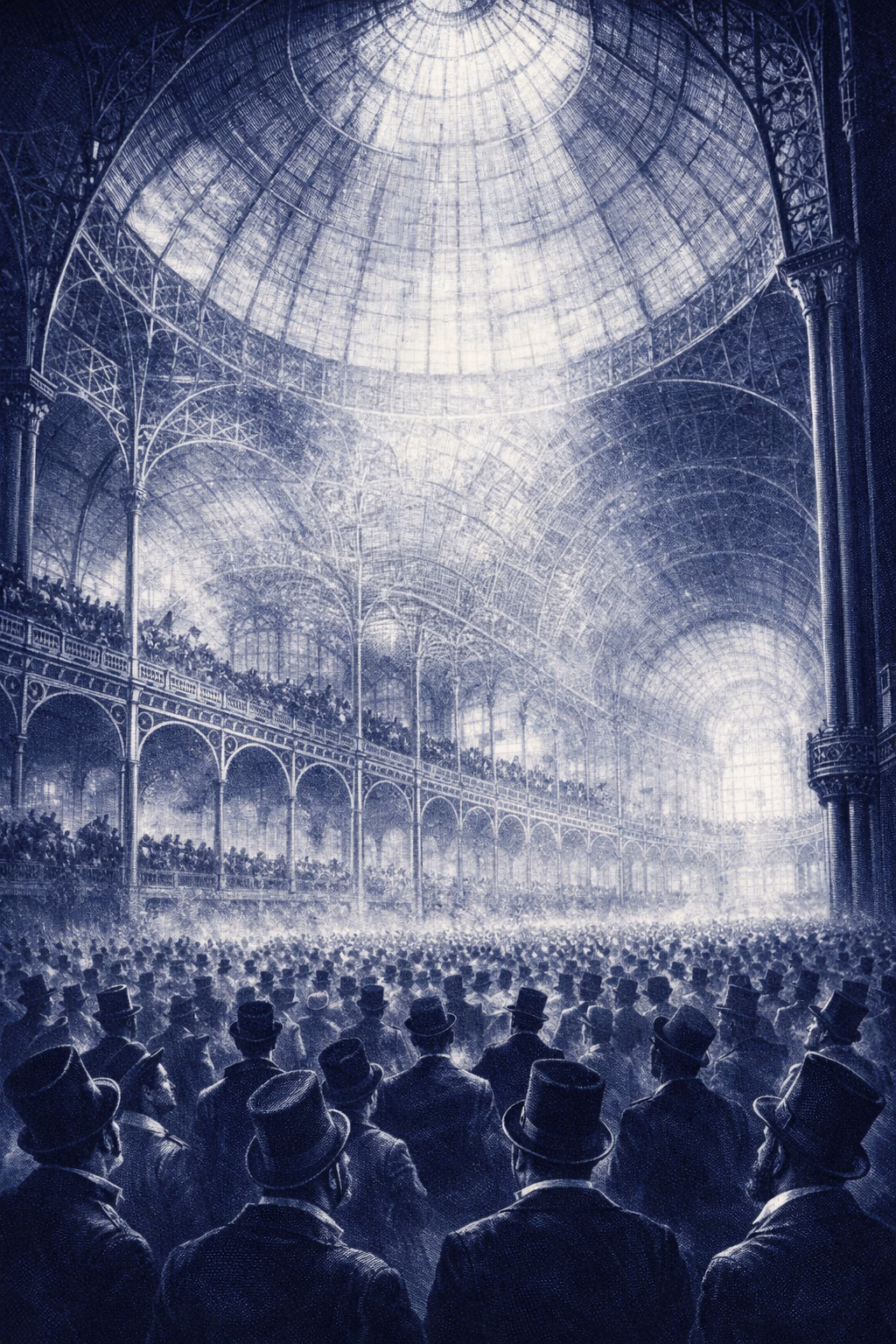
The Platform
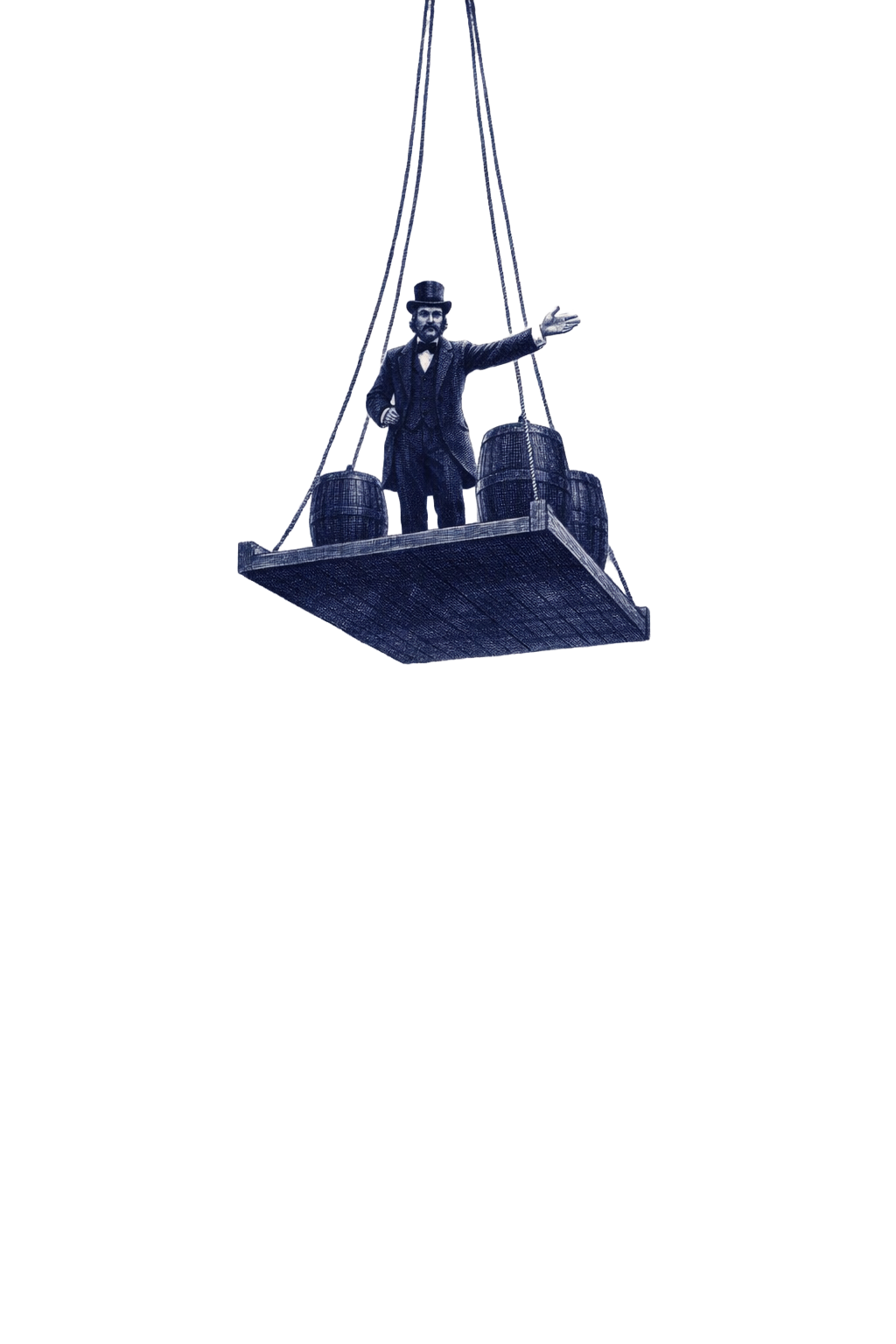
He stands on a wooden platform, thirty feet above a crowd of strangers. He has failed at everything — gristmills, sawmills, bedstead factories. He is forty-two years old and nearly broke.
He has built a device that he claims will prevent a platform from falling, even if the rope is cut.
Below him: the future. He just doesn't know it yet.
Neither do you.
The Cut
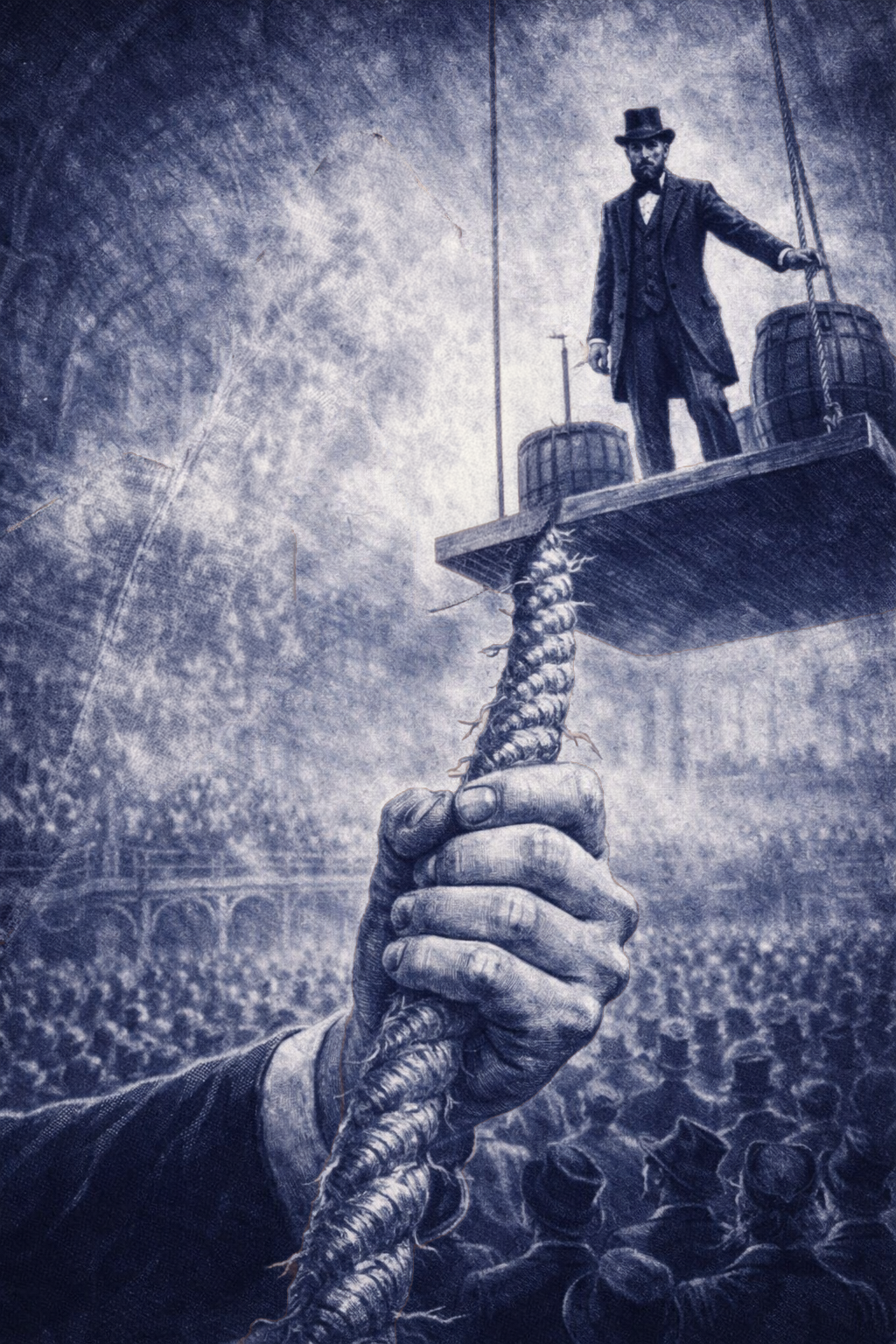
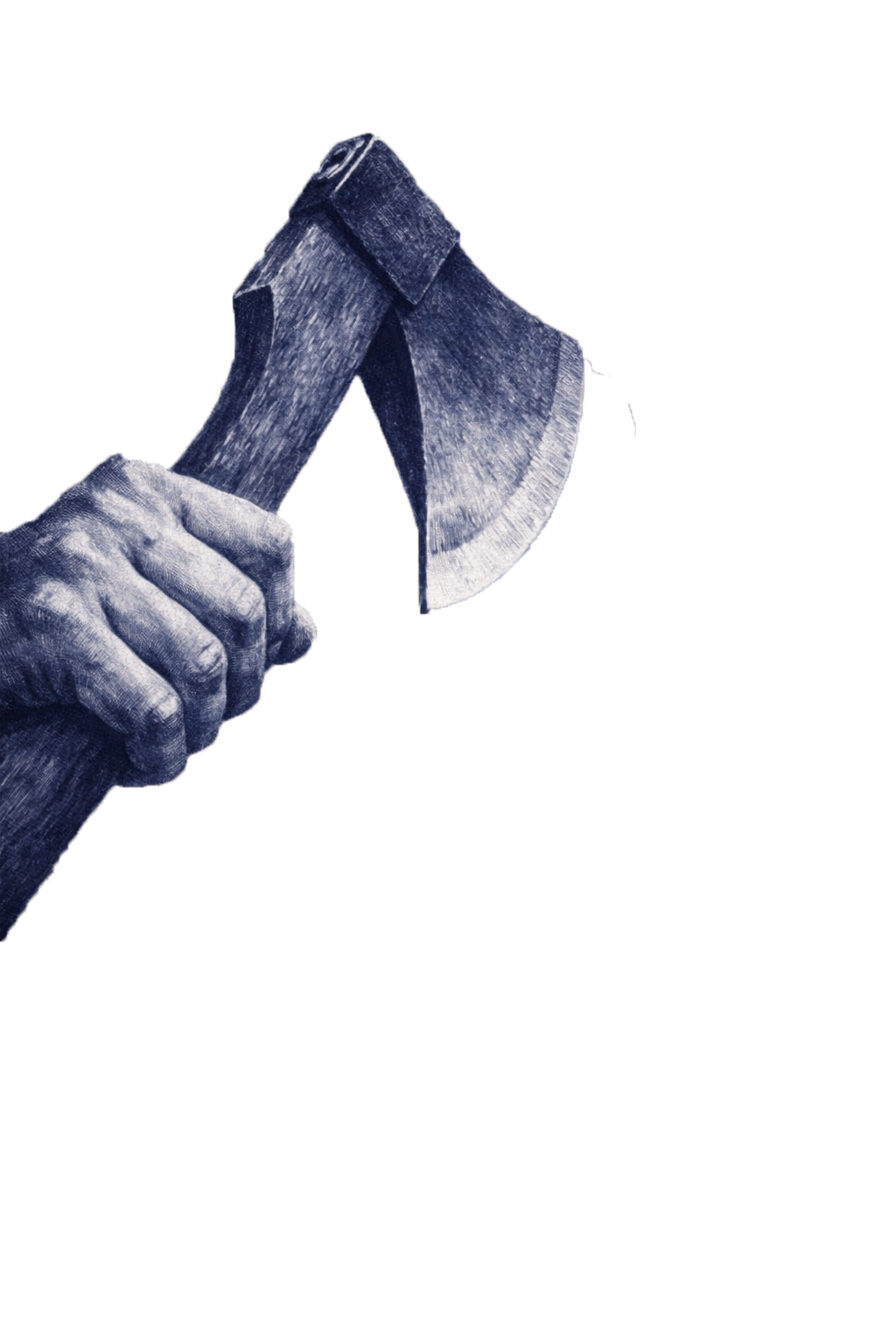
An assistant raises an axe.
Cuts the rope.
The Fall
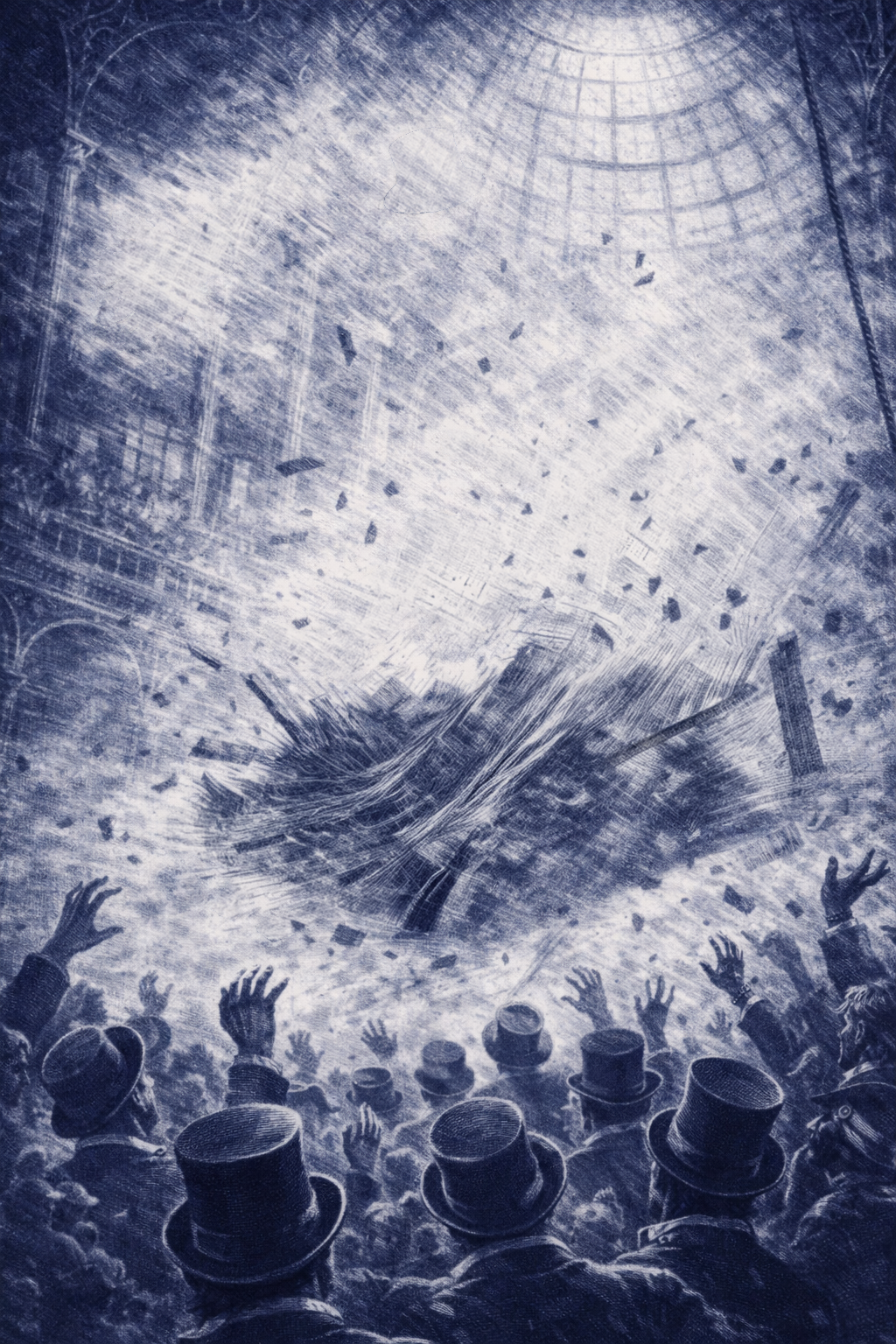
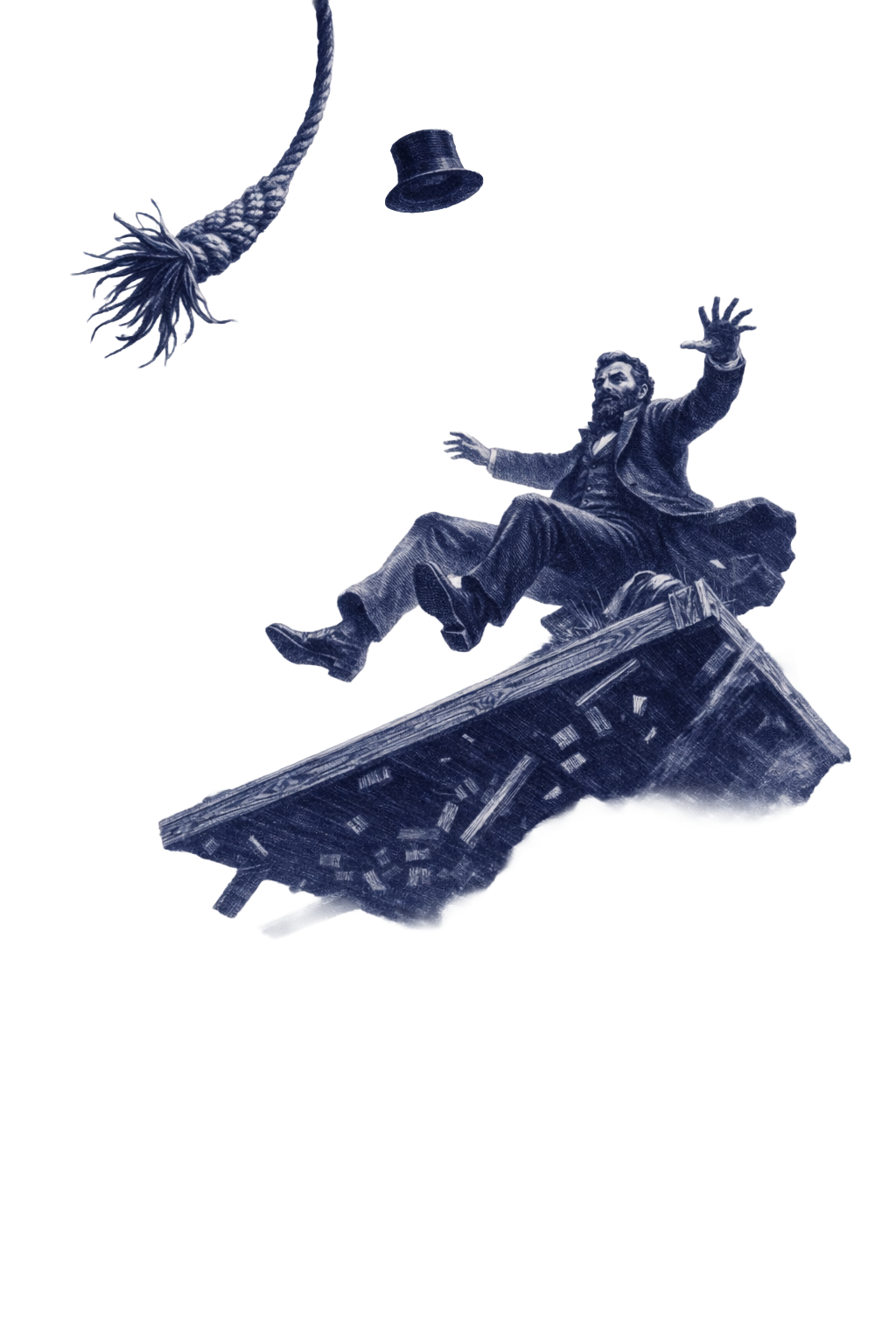
The platform drops. And keeps dropping.
The safety mechanism fails. The newspapers call it a death trap. No one invests. The rope falls. The world stays low.
This is where your world begins.
The rope falls. The world stays low.
But this didn't start with a rope.
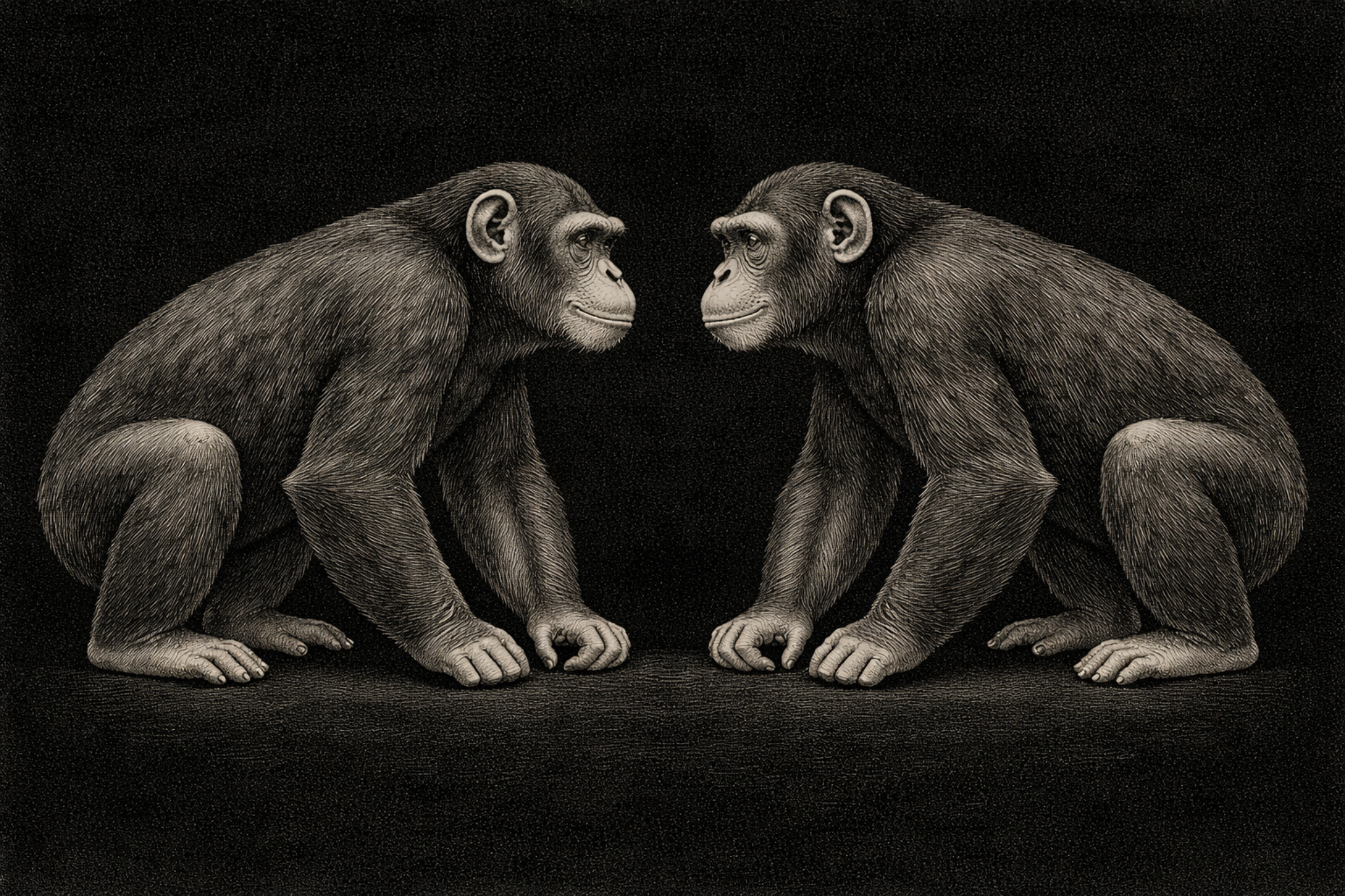
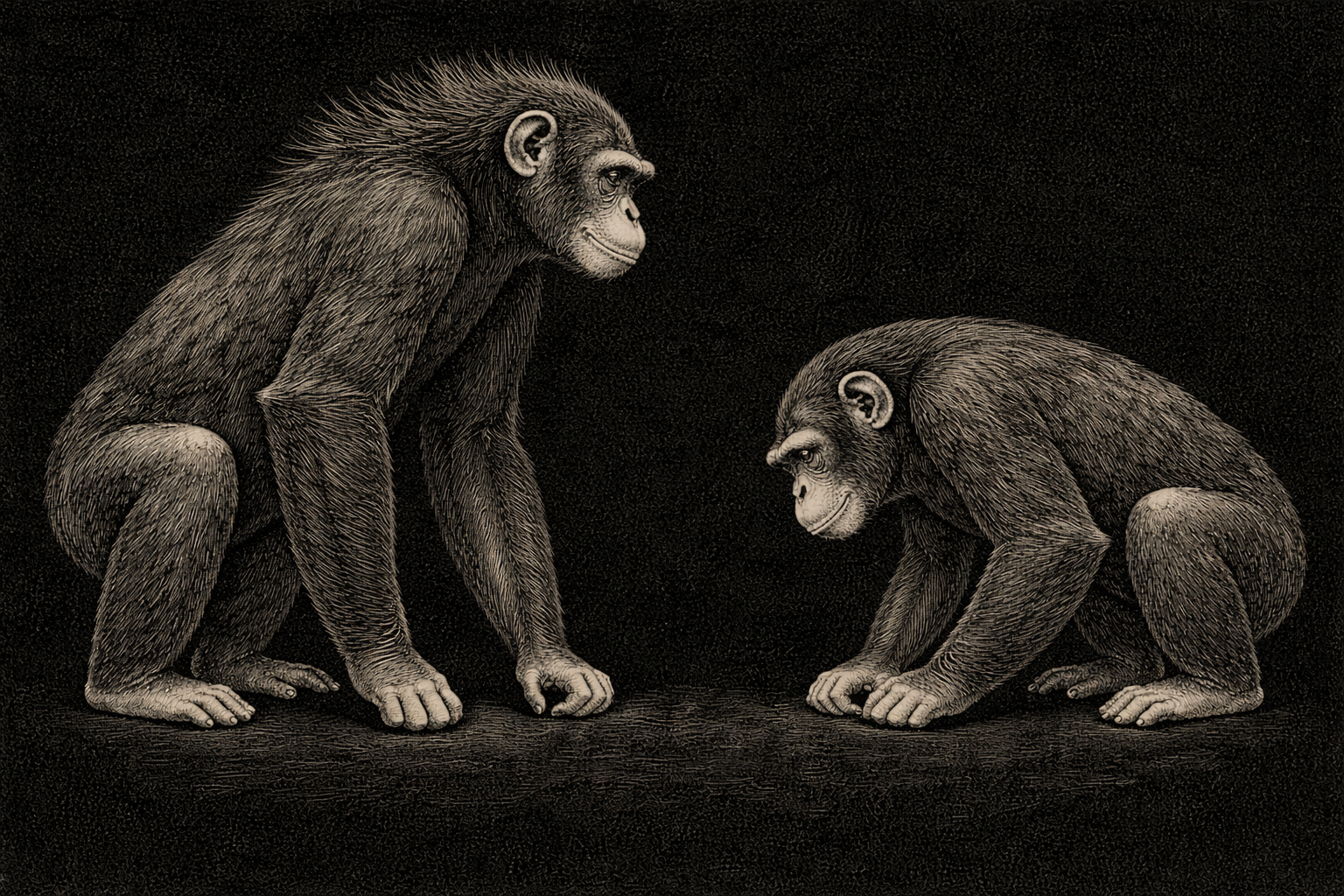
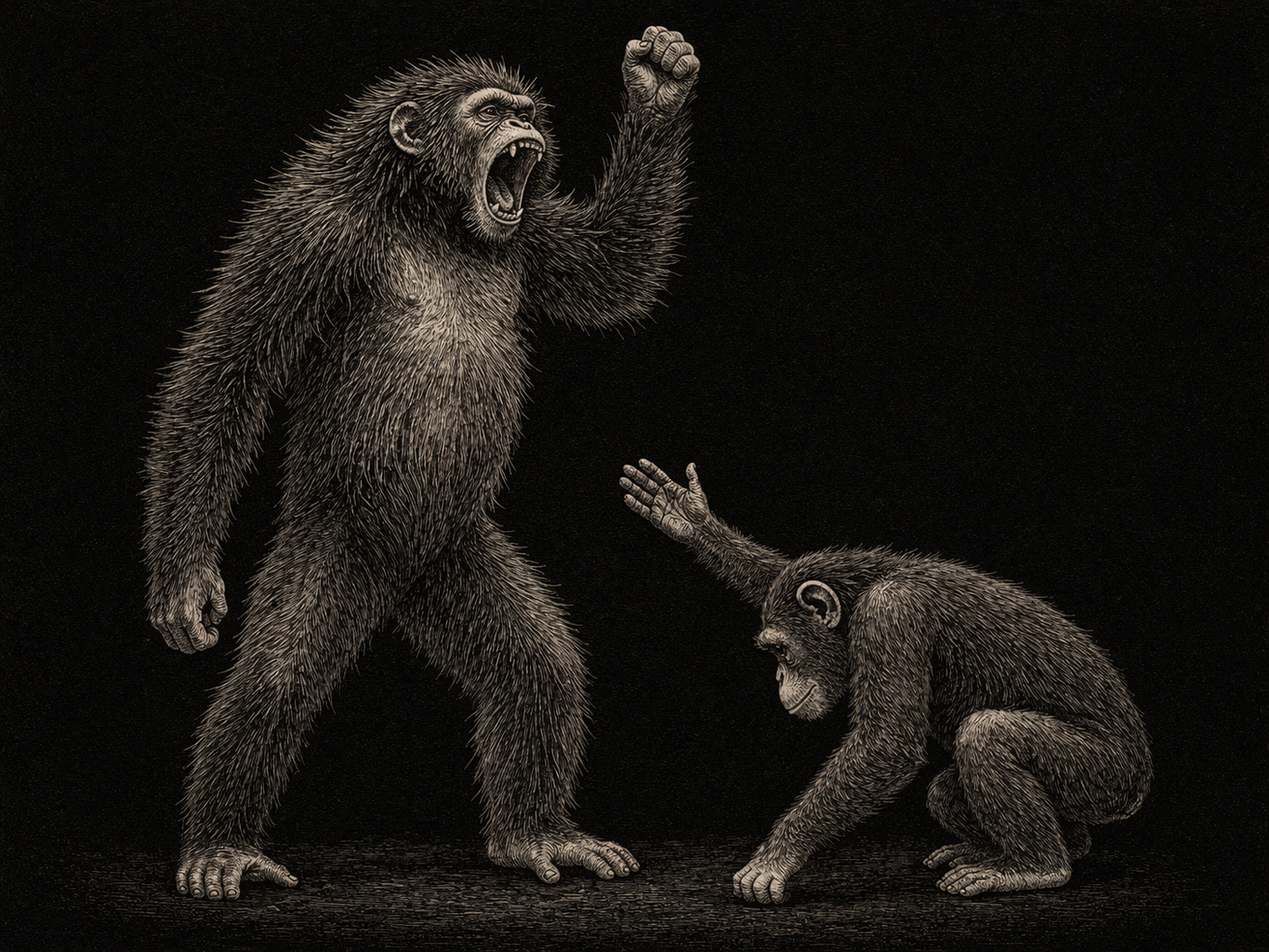
Thirty-five million years before the Crystal Palace, a primate stands upright. His hair rises until his body appears twice its size. He doesn't climb above the others. They make themselves low — crouching, bowing, reaching their hands up toward his face.
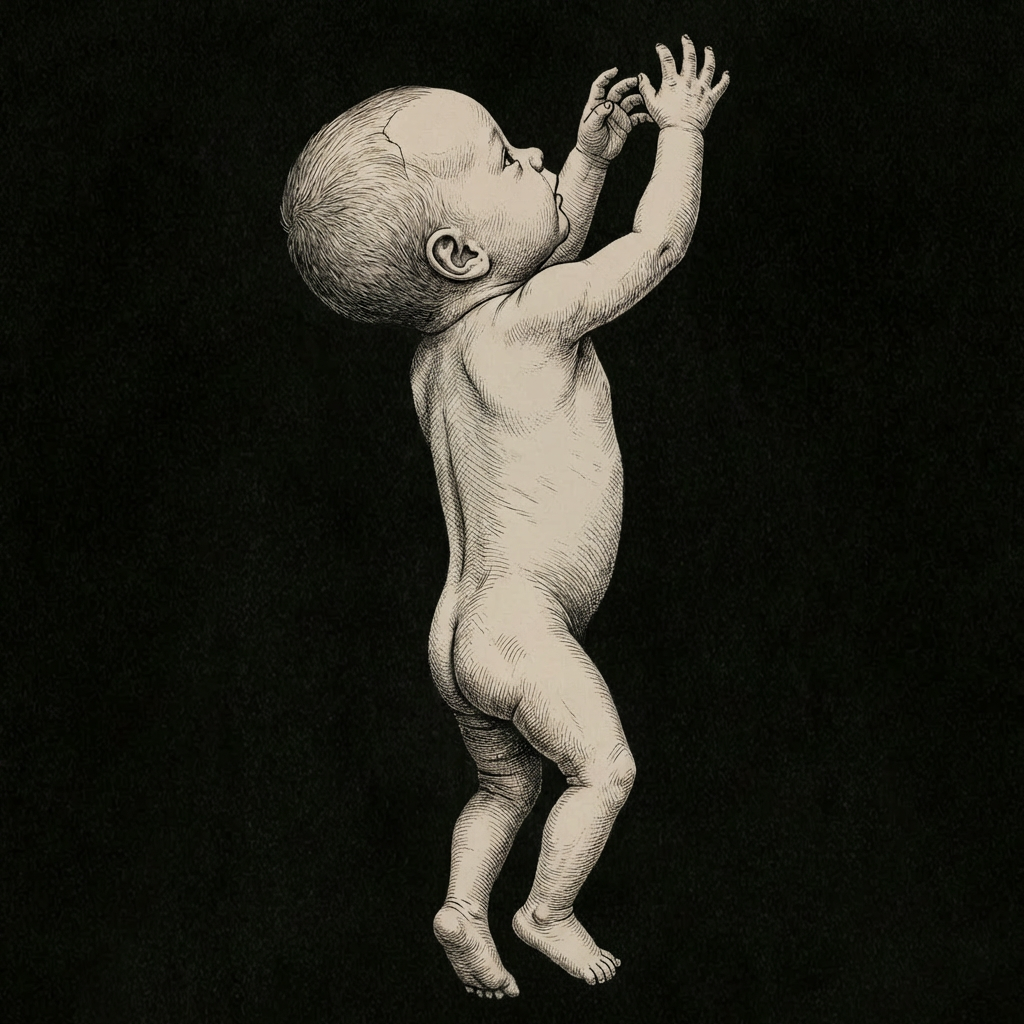
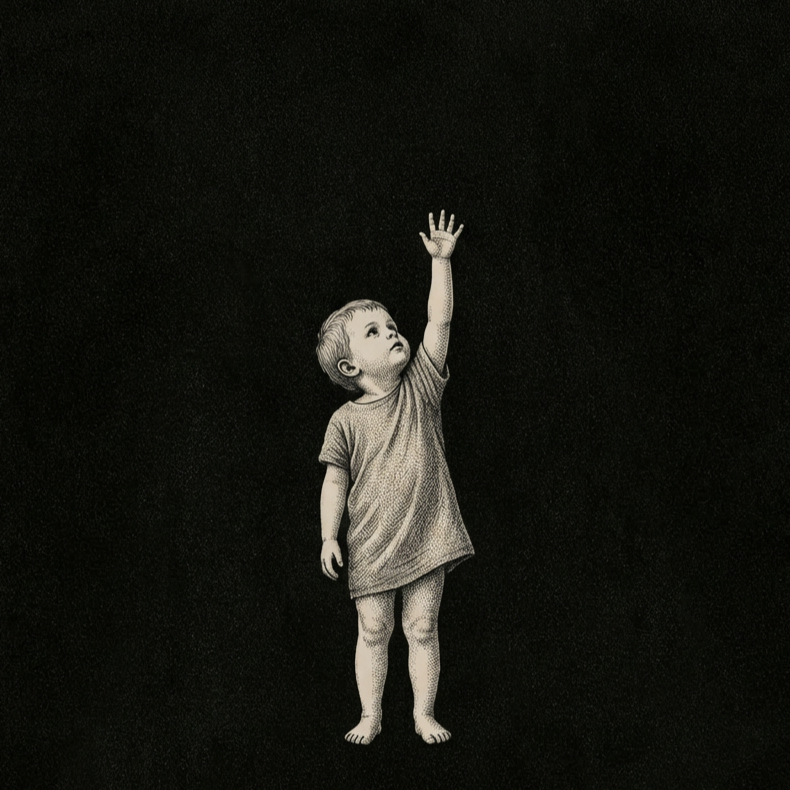
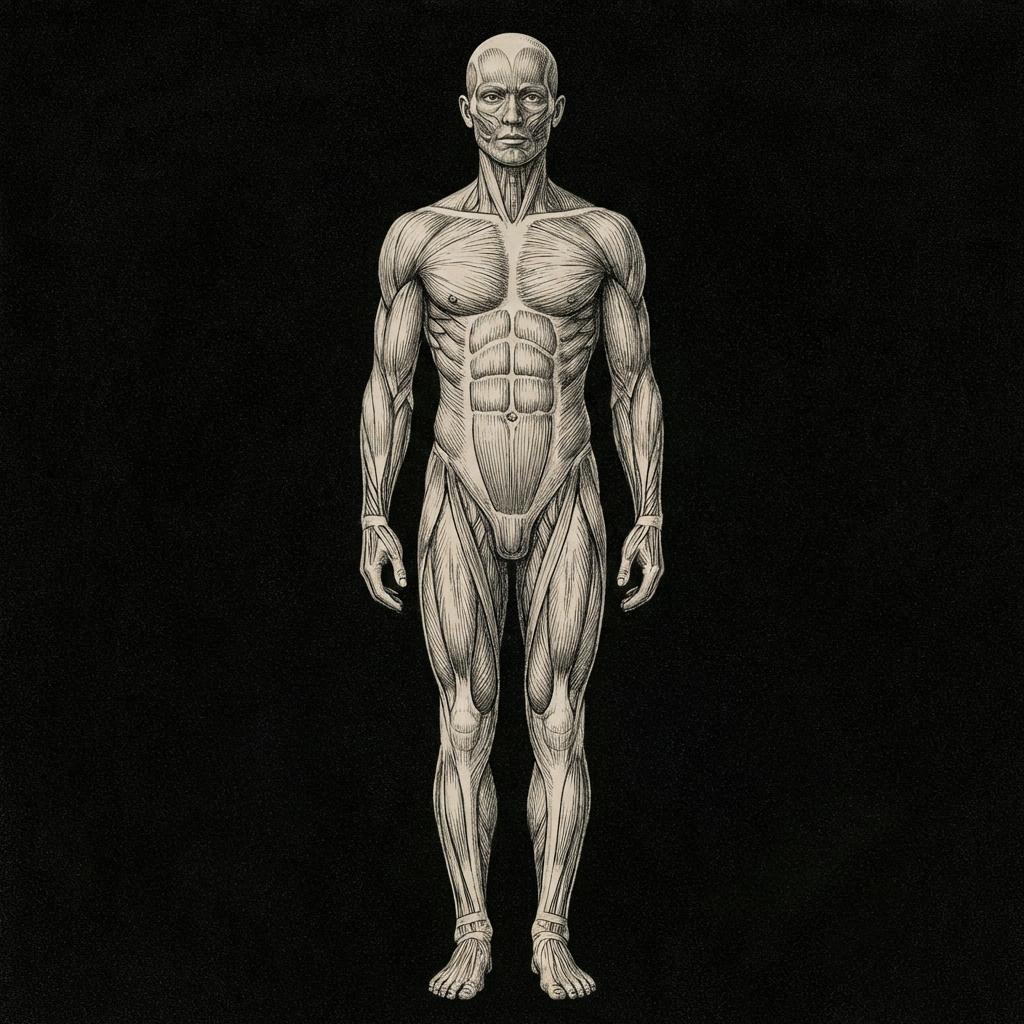
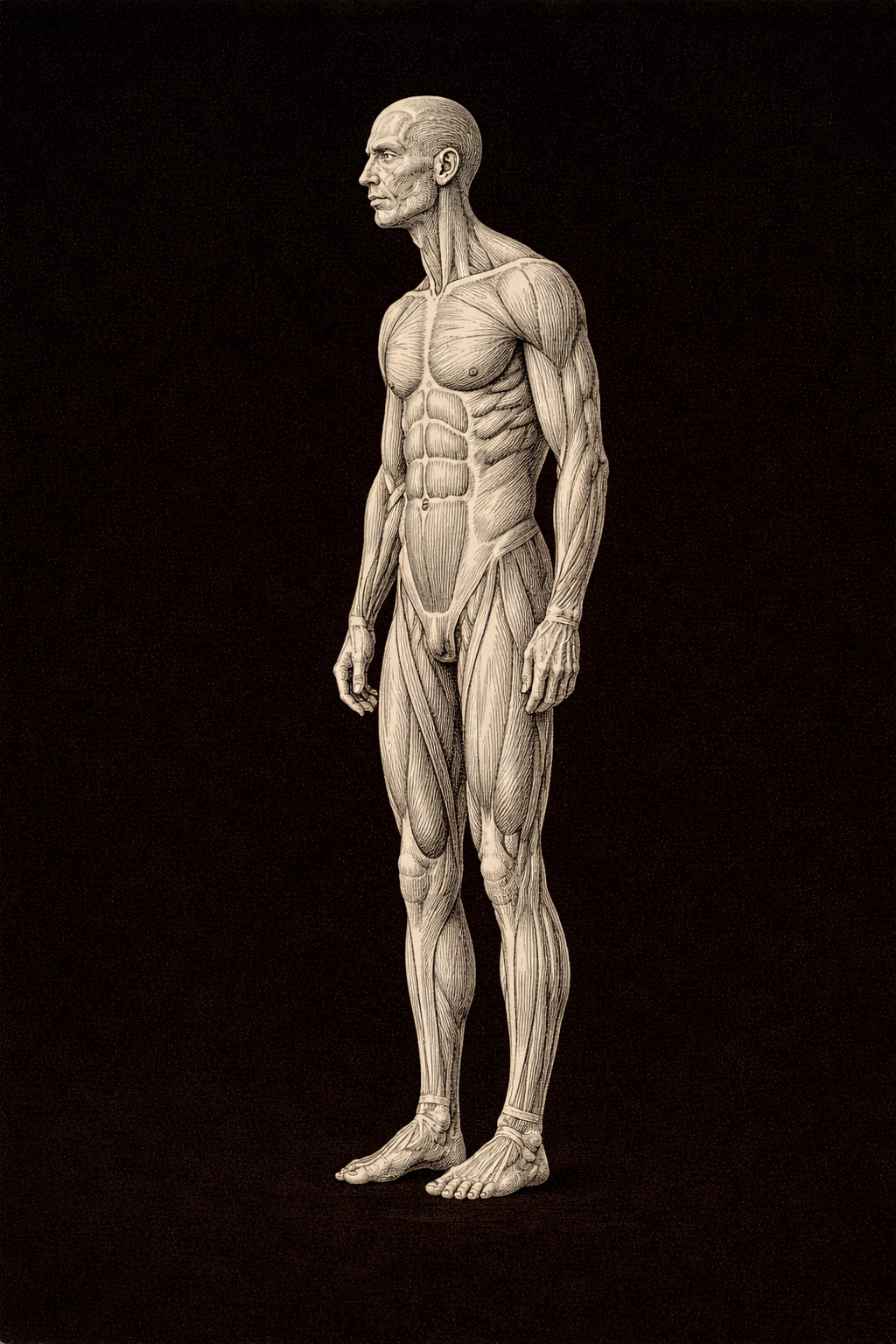
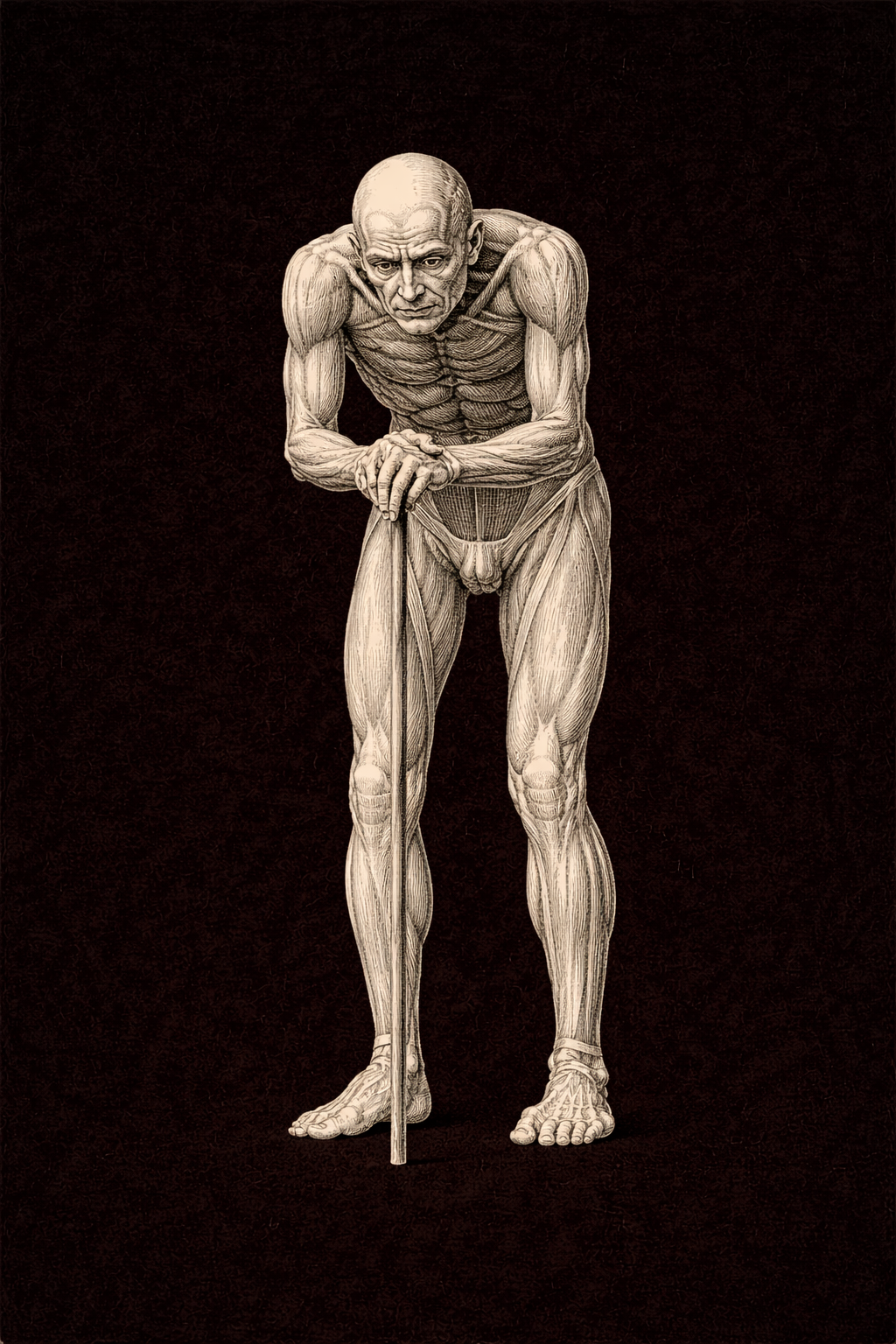
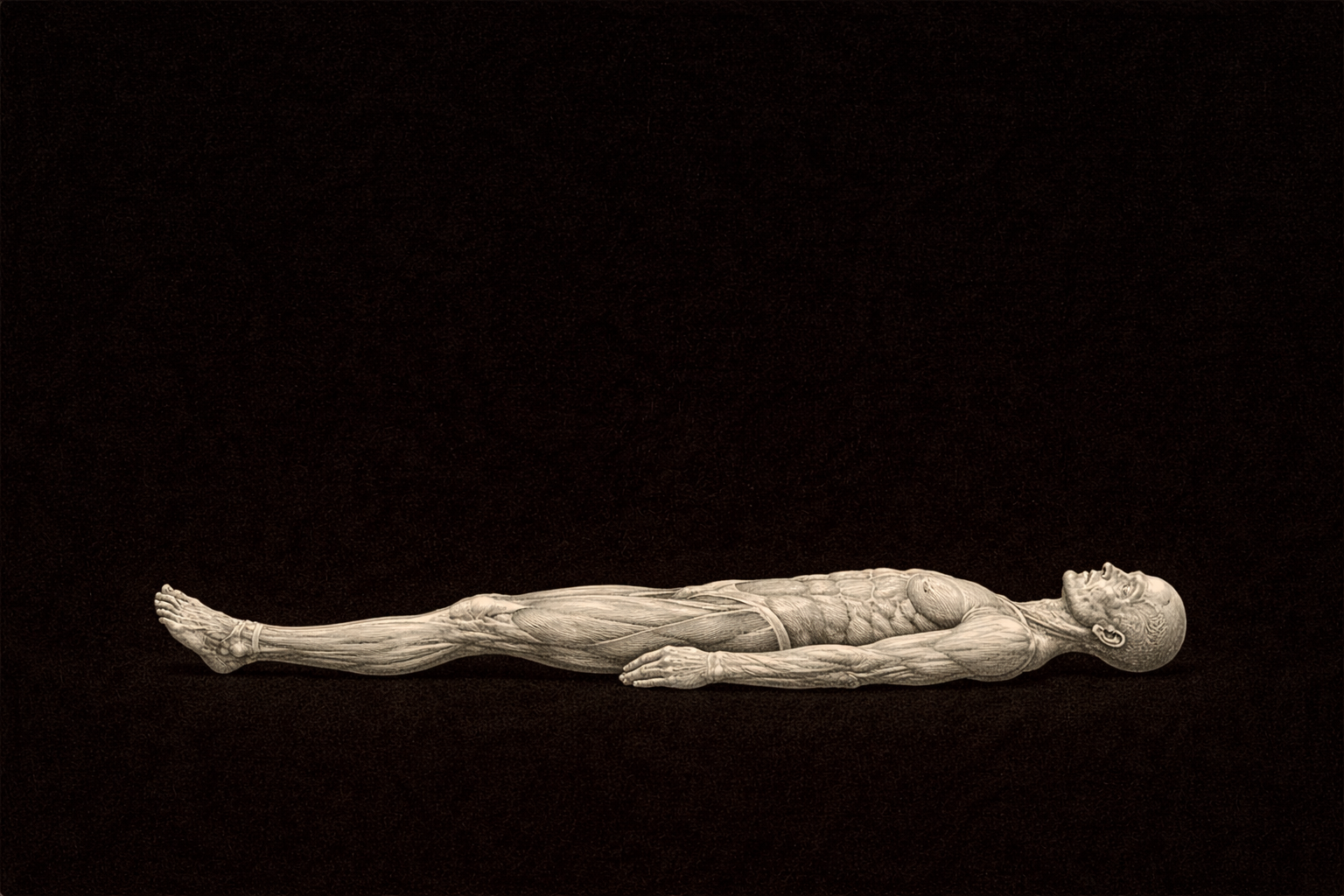
Standing, you are conscious. Alive. Powerful.
This is not a metaphor. It is the cost of having a body in a gravitational field. Every language on earth encodes it — happy is up, grief is down, power rises, the fallen have fallen, God is above, the grave is below.
Your brain maps power onto the vertical axis before you are aware of it. By the time you were five, you already knew: the tall ones are in charge.
The Ego
No language. No architecture. Just a body above other bodies — and every one of them understands what it means.
The body compresses. The body curves. The body falls.
But the desire doesn't.
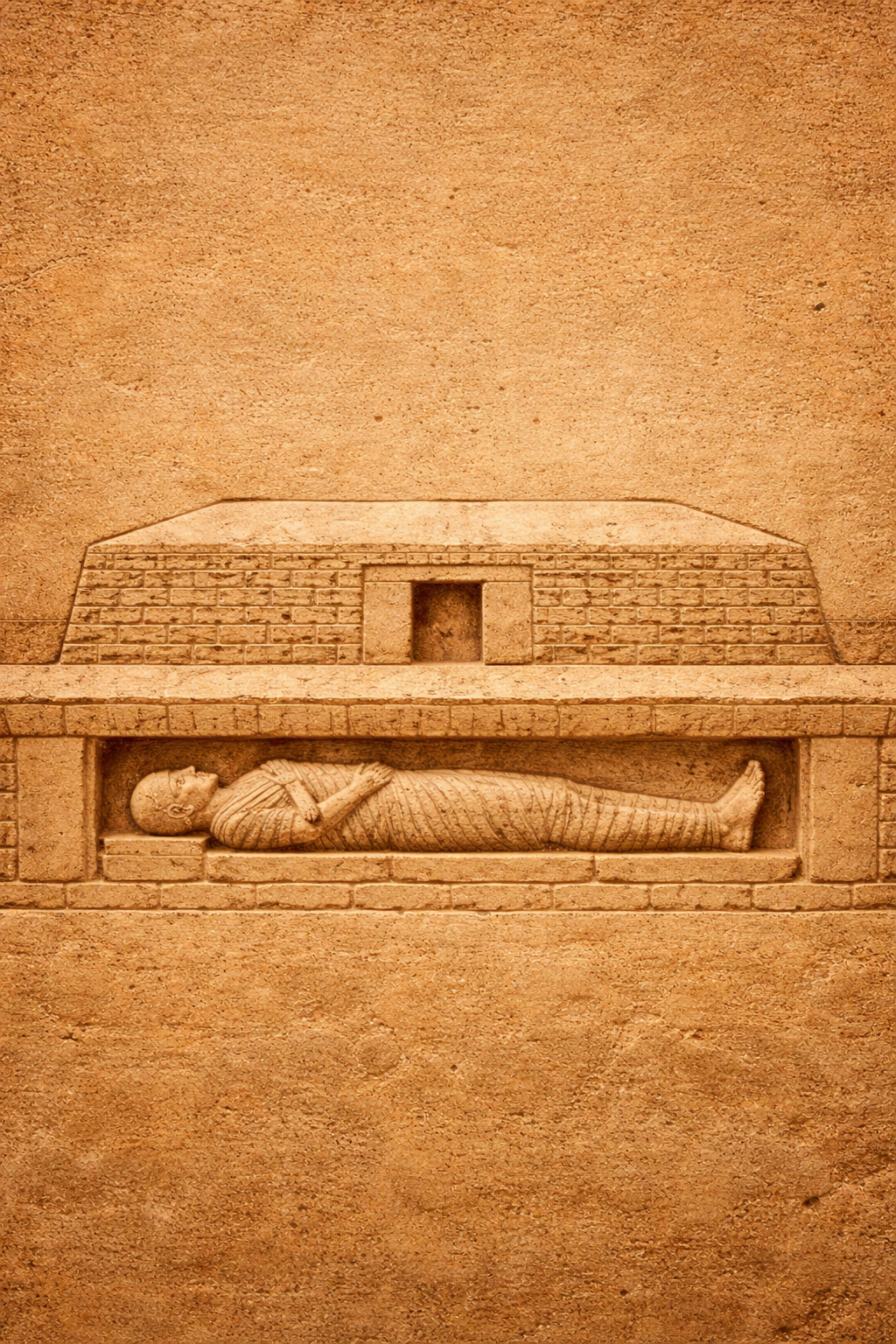
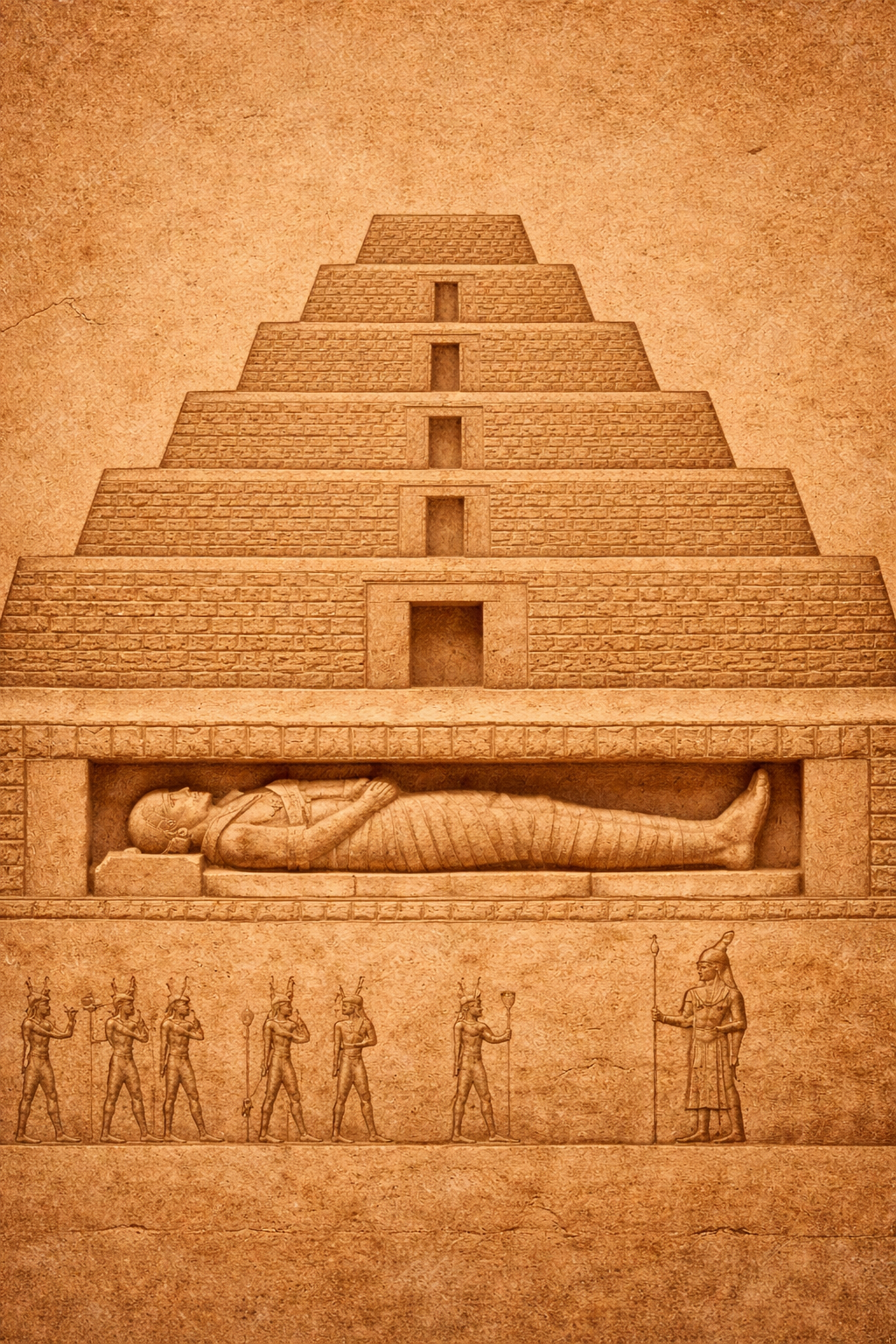
For three thousand years, the dead were kept low. A flat bench of mud brick pressed over the body. The grave was horizontal. Death was horizontal.
Then Imhotep stacked the tomb. Six times. Each layer smaller than the last. The grave became a staircase. Death itself was made to stand up.
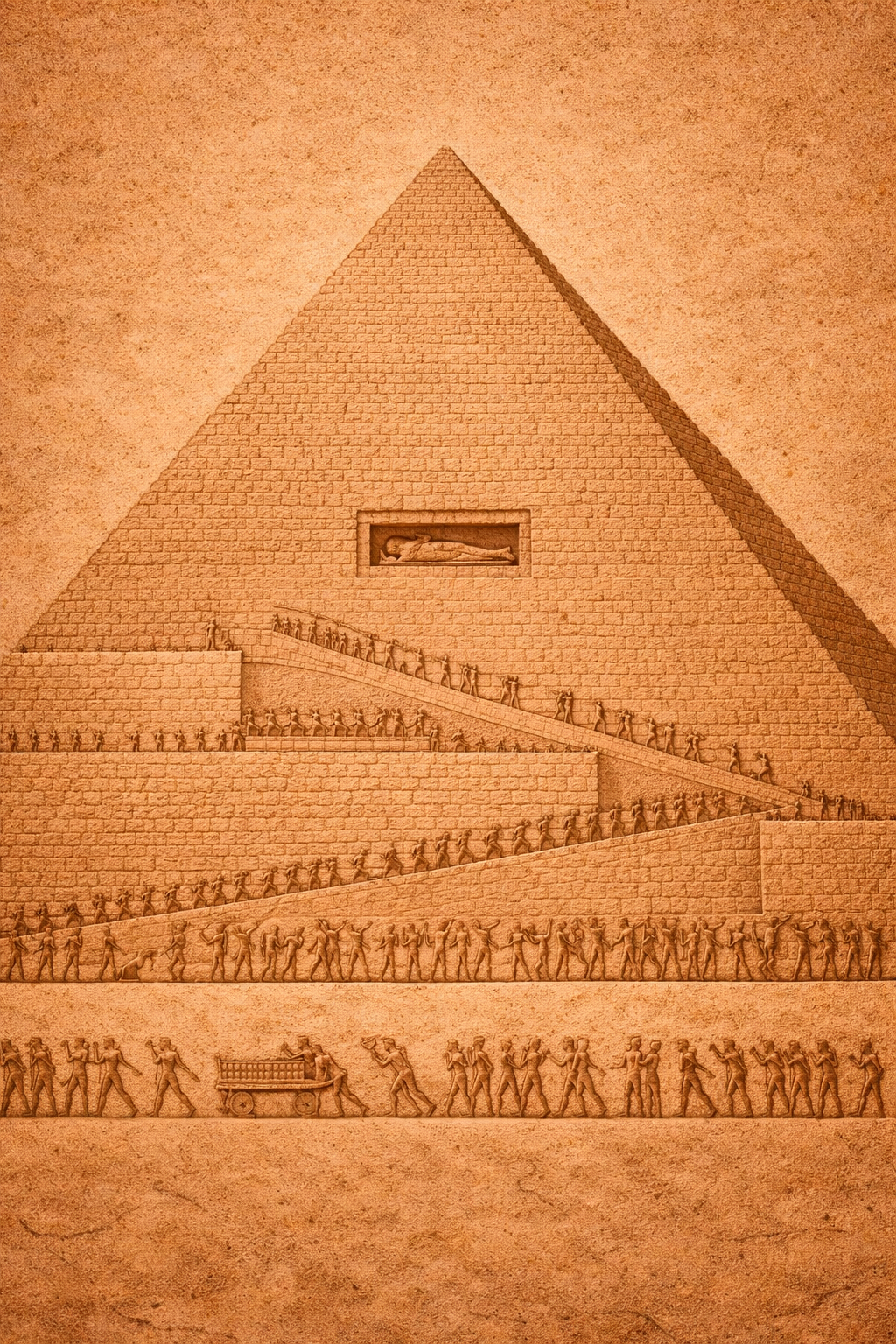
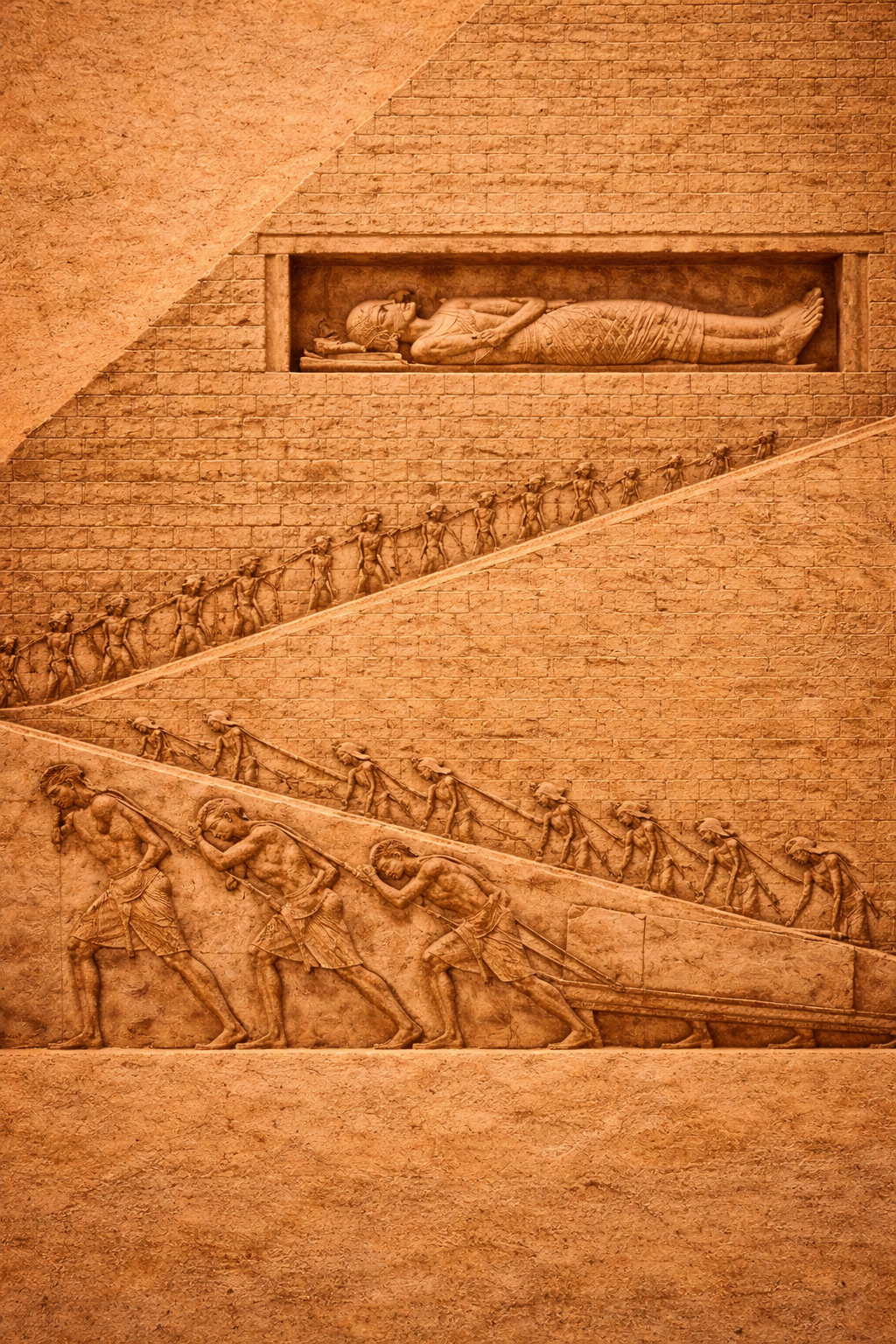
2.3 million blocks. One placed every two and a half minutes. For twenty years.
It held the record for 3,800 years. No other human object has held any record for that long. Not because of engineering. Because of the depth of the need.
They died at thirty-five. Crushed hands splinted with wood. Spinal compression written decades early, by stone.
Their spines compressed so the monument wouldn't. The summit of the Great Pyramid is occupied by a corpse. The tallest point on Earth for thirty-eight centuries, and no living person was ever meant to stand there.
The pyramid was built for the dead.
The next tower was built for the living.
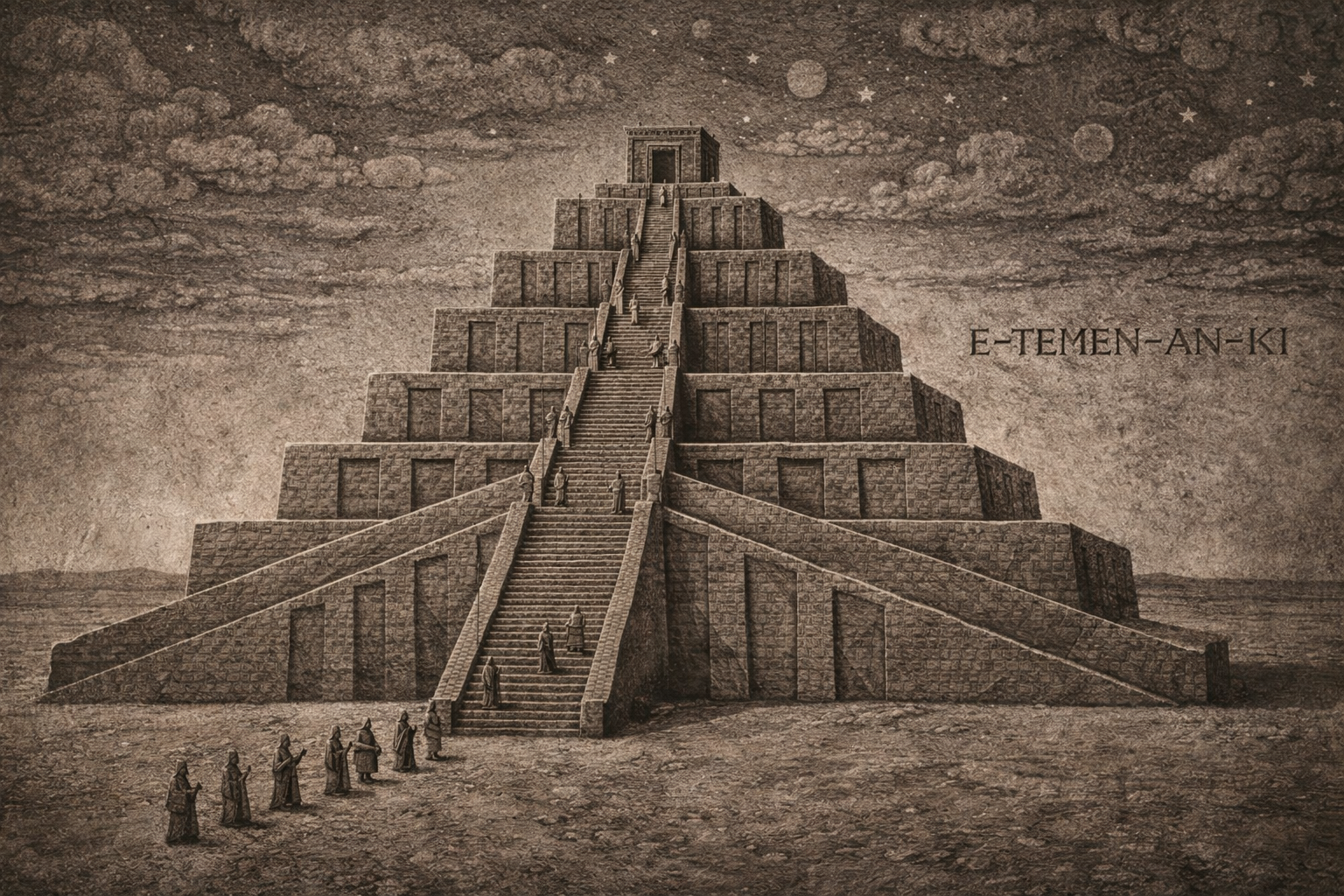
The Mesopotamian plain is flat. No mountains. No hills. The horizon is a line drawn with a ruler.
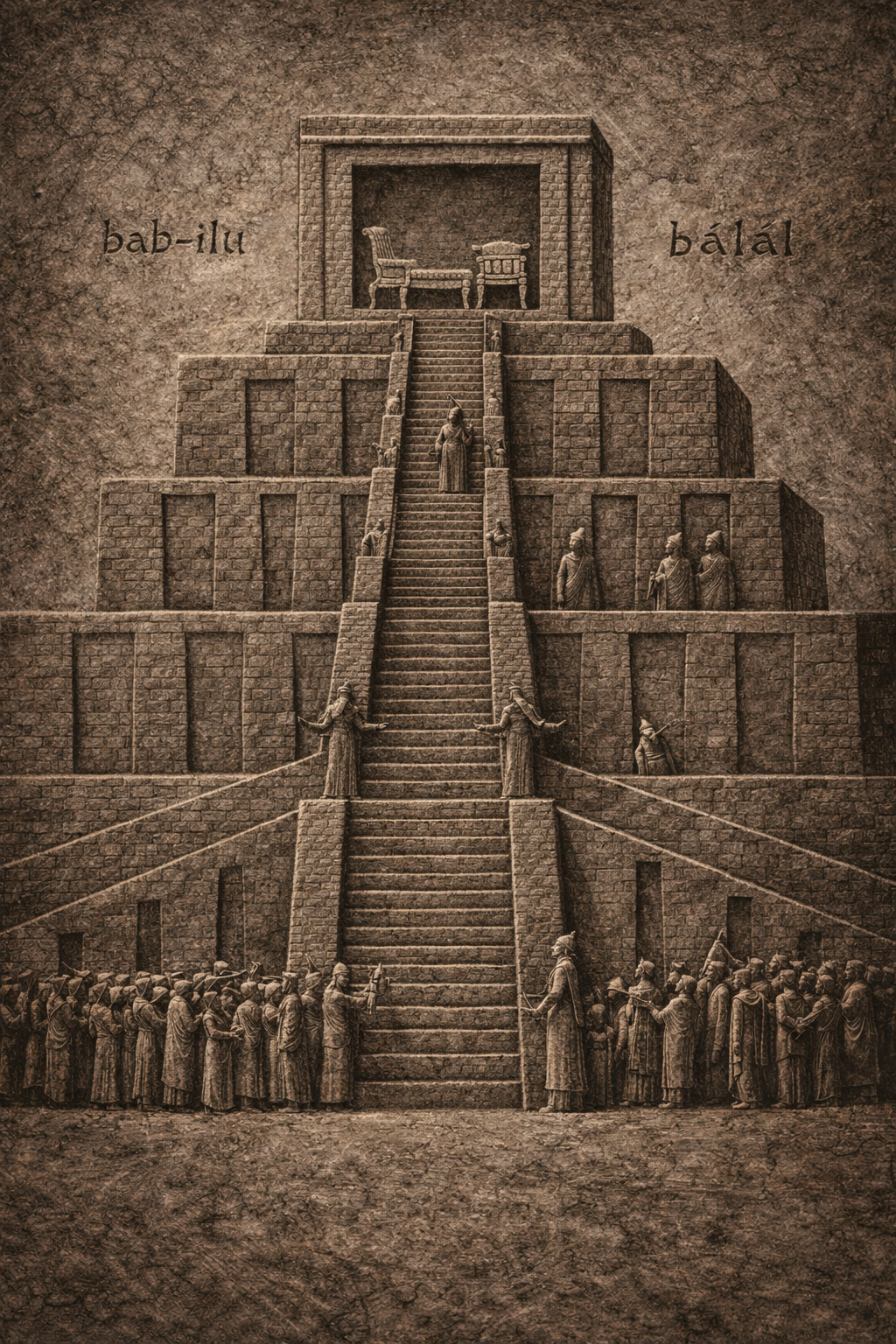
So they built a mountain. Seven stages of mud brick and bitumen. E-temen-an-ki. Temple of the Foundation of Heaven and Earth. The name is the thesis: this is where the ground meets the sky.
At the base, the public gathered. They could not climb. Above them, priests. Above the priests, one man — ascending to a summit chamber with a couch and a golden table. Furniture for a god.
As the structure rises, the population thins. Height is a social sorting mechanism encoded in stone.
The Akkadian word for Babylon: bab-ilu. Gate of God. The Hebrew author of Genesis renamed it. Balal. To confuse.
"Come, let us build us a city and a tower, whose top may reach unto heaven."
God did not destroy the tower. He scattered the builders. He broke their shared language. The punishment for building up is being spread out.
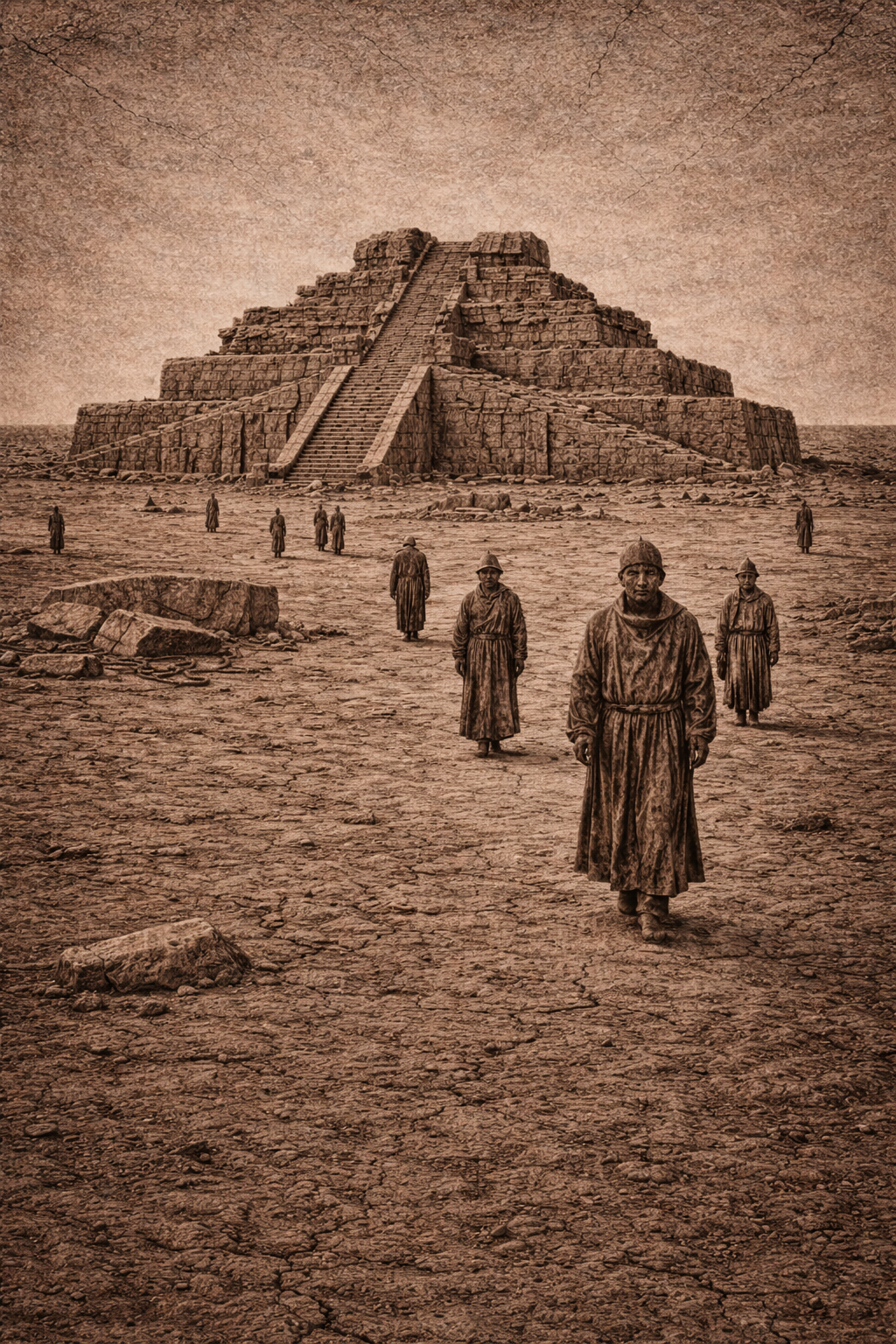
Built, destroyed, rebuilt, completed, described by a tourist who never climbed it, ordered repaired by a conqueror, demolished by the same conqueror, never rebuilt.
The rubble remained.
But the desire didn't.
Without the machine, how does the world go up?